Begin by acknowledging the shifting landscape of 2026. For business owners in Genesee County and across Michigan, the "good enough" approach to IT security has officially expired. If you’ve recently looked at a cyber insurance renewal form, you’ve likely noticed it’s no longer a simple one-page questionnaire. It is now a rigorous audit of your digital and physical defenses.
This is where you must shift your perspective. View compliance not as a hurdle to jump, but as a blueprint for business resilience. In this guide, we will walk through the specific requirements insurers are demanding in 2026 and how you can position your organization to not only qualify for coverage but to actually lower your premiums through proactive protection.
"In the digital age, security is not a product you buy, but a culture you build. It is the silent partner in every successful business transaction." : James Bowers, ClearPath360
Why the Rules Changed for Michigan Businesses
Use this space to understand the "why" behind the strictness. Insurers have faced record payouts due to sophisticated AI-driven ransomware and supply chain attacks. As a result, they have raised the bar. For a business in Flint, Grand Blanc, or Davison, staying compliant means proving you have a 360-degree view of your risks.
As you move toward a more secure infrastructure, remember that insurers are looking for "Enterprise-Grade" controls, even for small to mid-sized businesses. They want to see that you are moving away from reactive "break-fix" models and toward comprehensive cybersecurity that monitors your network 24/7.
Step 1: Establish Your Baseline Security Controls
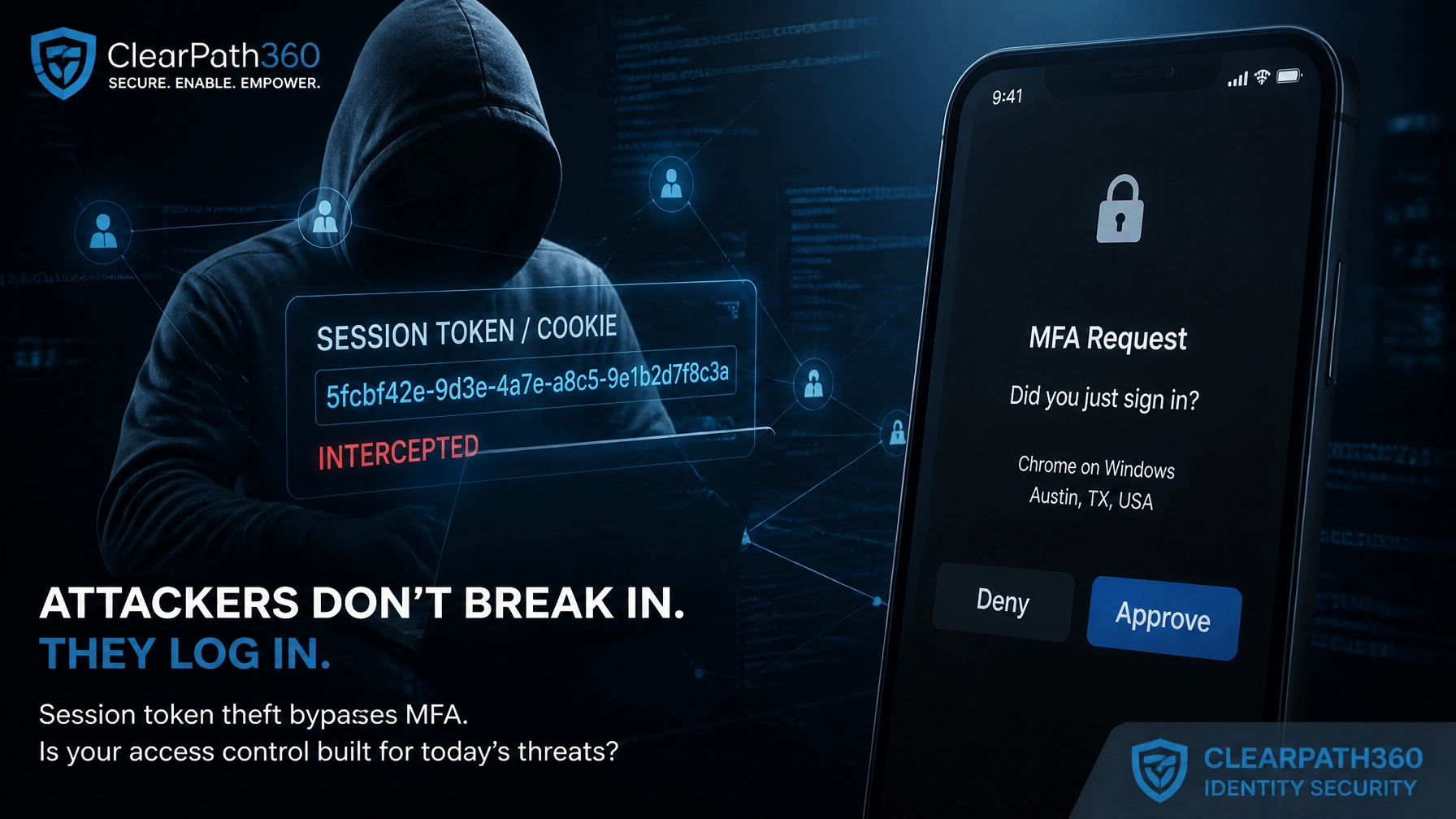
Begin by identifying the "Big Three" of 2026 compliance: Multi-Factor Authentication (MFA), Endpoint Detection and Response (EDR), and Immutable Backups. Without these, most insurers will deny coverage before you even finish the application.
Mandatory MFA Everywhere
It is no longer enough to have MFA on just your email. Insurers now require it on:
- Remote Access (VPNs/RDP)
- Financial and Accounting Software
- Privileged Administrative Accounts
- Cloud-based Storage
From Antivirus to EDR
Share with your team that traditional antivirus is a relic of the past. 2026 compliance requires EDR or MDR (Managed Detection and Response). These systems don't just look for known viruses; they use behavioral detection to stop "Zero-Day" attacks before they can spread. This proactive approach is a cornerstone of how managed IT services protect your bottom line.

This is where a dedicated Security Operations Center (SOC) provides value. By having experts monitor your endpoints around the clock, you provide the "proof of oversight" that insurance adjusters crave.
Step 2: The Convergence of Physical and Cyber Security
This is where the 2026 landscape gets interesting for Michigan business owners, particularly those participating in public safety initiatives like the 911 Camera Share.
If you are a school, church, or business owner in Genesee County, you may already be integrating your surveillance systems with local law enforcement to enhance public safety. However, this connection introduces a new set of cyber risks. Insurers will ask: How is your camera network segmented from your financial data?
The 911 Camera Share Initiative & Cyber Risk
When you open a portal for local 911 dispatch to access your feeds during an emergency, you must ensure that access is secured with the same level of rigor as your bank accounts. Use this section to reflect on the importance of integrating physical security with cybersecurity.

Strike a balance between being a good community partner and a secure business. At ClearPath360, we recommend using high-quality hardware like Axis Communications and securing it with encrypted, cloud-based management systems. This ensures that your contribution to public safety doesn't become a backdoor for hackers.
Step 3: Proactive Protection Hacks for 2026
Keep your language focused on action. To meet compliance, you need to prove that you are doing more than just the bare minimum. Use these proactive strategies to impress your insurance carrier:
- Immutable Backups: Ensure your data is backed up in a way that cannot be deleted or altered by ransomware. If a hacker gets into your system, they can't touch your "air-gapped" or immutable backups.
- Regular Patch Management: Don't wait for "Update Tuesday." Automate your patching for all software, including your surveillance system firmware.
- Employee Training: Share phishing simulations with your staff. Most breaches happen because of a single clicked link. Proof of ongoing training can often lead to insurance discounts.
As you move toward these goals, focus on data protection essentials that build a resilient infrastructure.
Step 4: Structuring Your Compliance Roadmap
Use this space to organize your efforts. Compliance isn't a weekend project; it’s a strategic shift. You should begin by performing a gap analysis. Where does your current IT setup fall short of 2026 standards?

Maintain a professional yet accessible tone when discussing these gaps with your IT partner. You want a consultant who doesn't just give you a list of problems, but a partner who builds a tailored technology solution that grows with your business.
"The goal of cybersecurity is not to build a bigger wall, but to create a smarter system that knows who to let through and how to respond when the unexpected happens."
The Michigan Business Owner’s Compliance Checklist
Employ directive language here to ensure you are ready for your next insurance renewal:
- Audit Your MFA: Is it active on every single entry point?
- Verify Your Backups: When was the last time you actually tested a restoration?
- Segment Your Networks: Is your guest Wi-Fi and 911 Camera Share feed completely separate from your business-critical data?
- Review Your Vendor Risk: Are your partners (like your IT company) as secure as you are?
- Document Everything: Create a written Incident Response Plan. If you don't have it on paper, the insurer assumes it doesn't exist.
Moving Forward with Confidence
As you conclude this guide, realize that the effort you put into cyber insurance compliance is actually an investment in your company’s longevity. By following these steps, you are doing more than just checking boxes for an insurance agent; you are building a robust IT infrastructure that can withstand the threats of tomorrow.
This is your chance to take control. Don't wait for a data breach scare to realize you’re under-insured or out of compliance. At ClearPath360, we specialize in this 360-degree approach, ensuring your managed IT, cybersecurity, and surveillance systems work in harmony to protect your business, your people, and your community.
Forward-looking businesses in Genesee County are already making these changes. Will you be one of them?