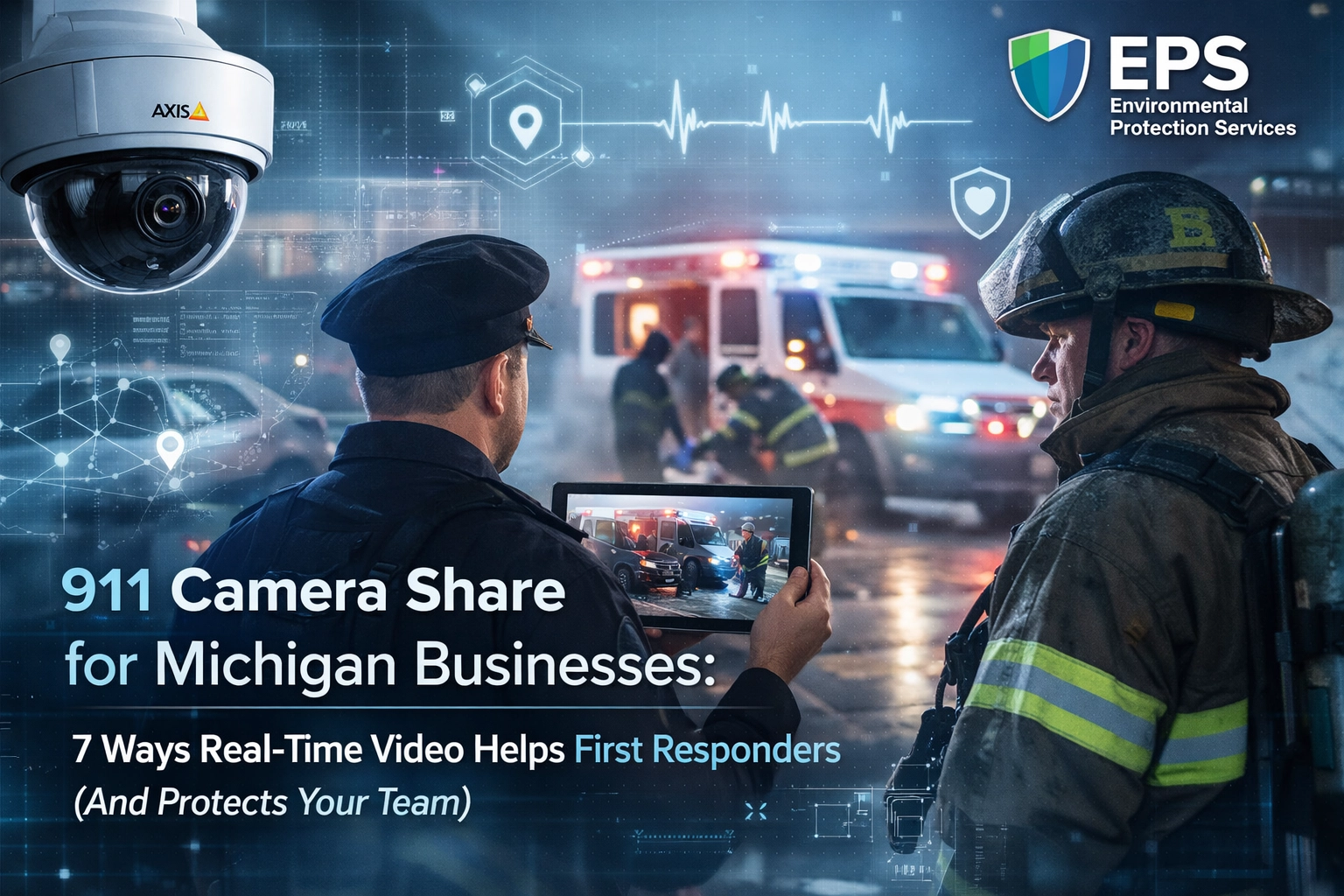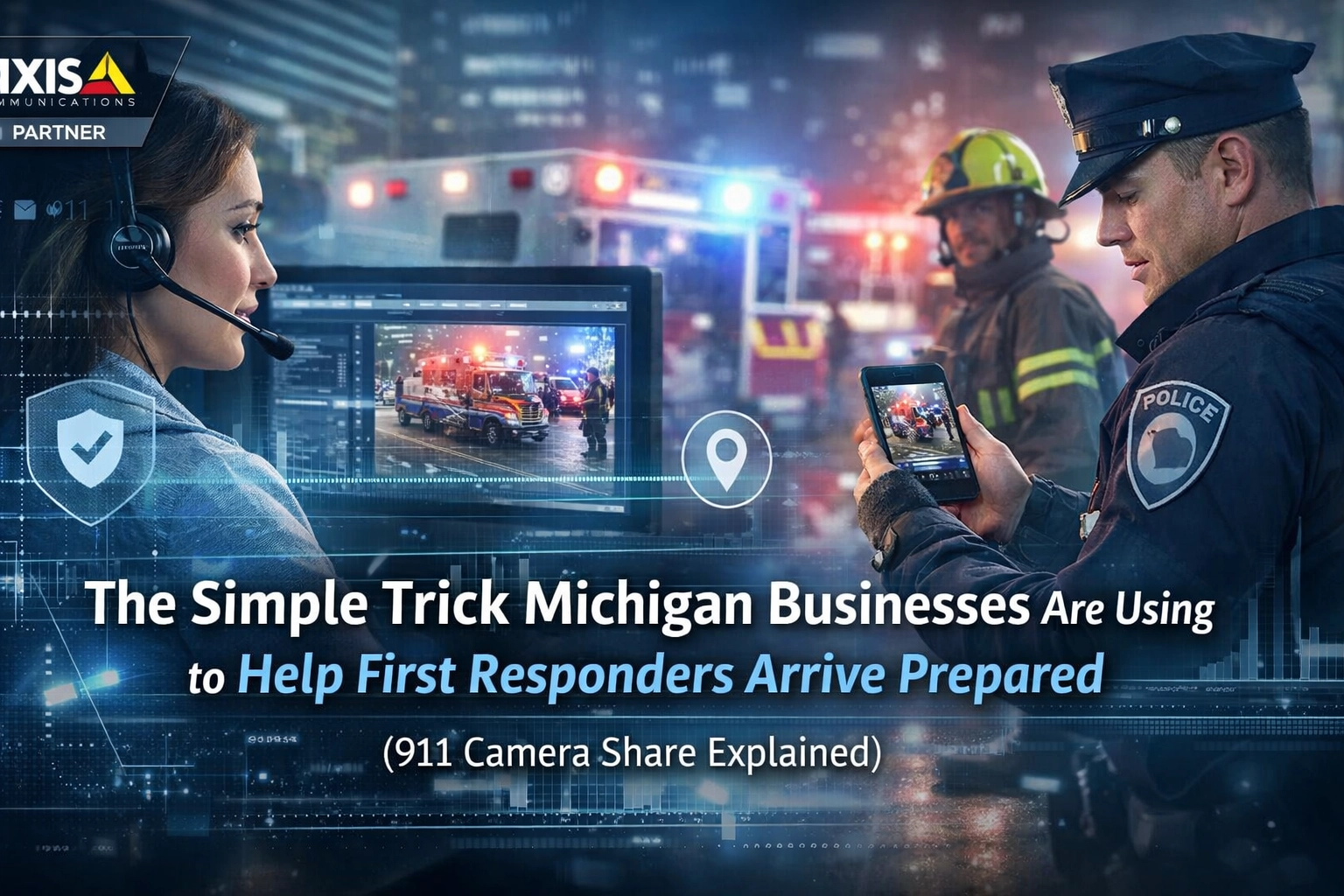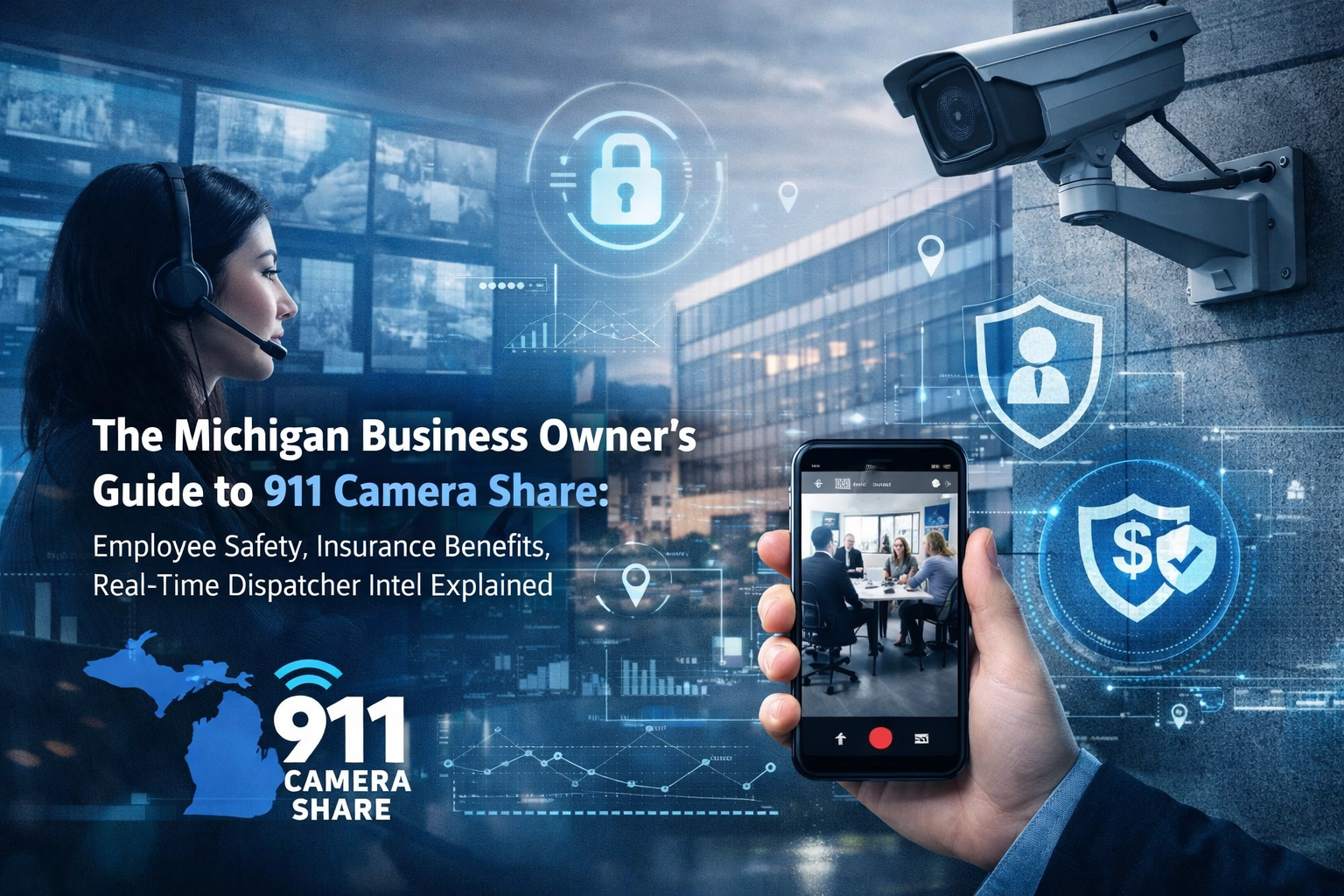
Here's the reality: Your security cameras are probably sitting there recording everything, but when someone dials 911 from your Michigan business, those cameras might as well not exist. Dispatchers are working blind, relying on panicked phone descriptions while your crystal-clear video feeds remain locked away in your network. That gap? It's costing valuable seconds: and potentially lives.
911 Camera Share through ClearPath IT changes this equation entirely. This isn't about giving law enforcement perpetual access to your surveillance system. Instead, it's an emergency-triggered bridge that activates only when someone from your location dials 911, gives dispatchers real-time visual intelligence, then terminates access the moment the emergency concludes.
If you're a Michigan business owner running Axis Communications cameras or considering upgrading your alarm system and access control infrastructure, understanding how 911 Camera Share integrates with your managed IT environment isn't optional anymore: it's becoming the standard for businesses that take employee safety and emergency preparedness seriously.
Bridging the Gap: What First Responders Actually Need
Begin by understanding the dispatcher's perspective during an active 911 call from your business. They're hearing descriptions filtered through extreme stress, trying to relay accurate information to officers en route. "Guy with a weapon" could mean anything from a hunting rifle to a box cutter. "Three suspects" might actually be two perpetrators and one victim who looked suspicious to the caller.
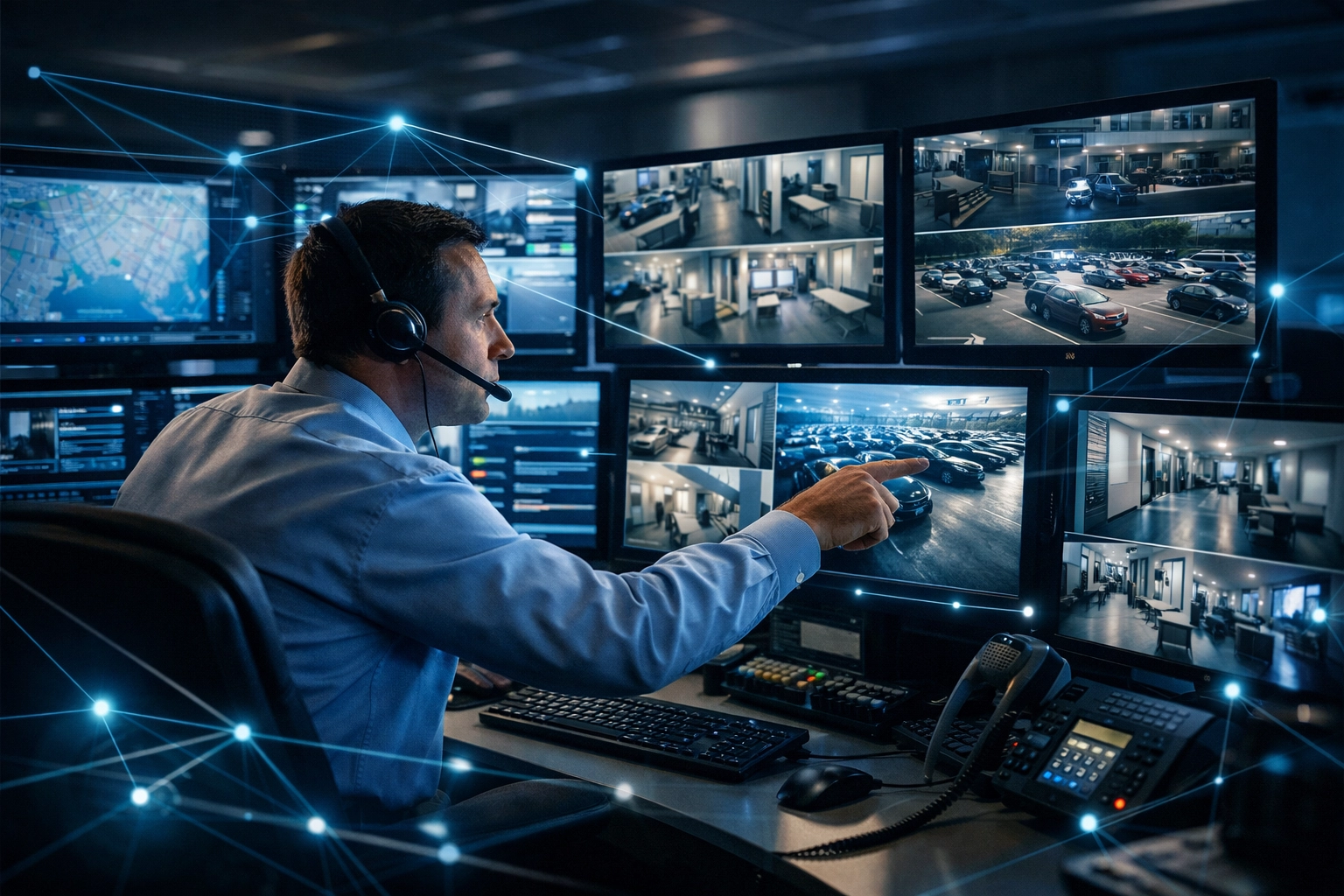
911 Camera Share through ClearPath IT solves this by providing immediate visual confirmation. When your employee dials 911, dispatchers receive notification that camera access is available. They can accept or decline based on the incident, but when they do connect, they're seeing exactly what's happening: suspect count, visible weapons, movement direction, whether anyone's injured, and hazards that could endanger responding officers.
This matters enormously in Michigan counties like Livingston, where the technology was first demonstrated at the Livingston Educational Service Agency serving 26,000 students. As Kecia Williams, 911 director of Livingston County 911 Central Dispatch, explained: telecommunicators can "instantly see for ourselves what's going on, and we can get this information to the fire department, EMS or law enforcement much quicker."
Notice the careful language there: "can help get information quicker." That's intentional. 911 Camera Share helps dispatchers coordinate better responses, but it doesn't guarantee specific response times. What it does guarantee is better-informed responses, which often translates to more appropriate resource deployment and enhanced officer safety.
Why Your Legacy Systems Are Only Half-Ready
Your existing Axis Cameras and alarm system represent significant investment in physical security infrastructure. The problem? They're probably operating as isolated islands rather than integrated emergency response tools.
Share this assessment with your IT partner: most Michigan small business security setups excel at recording incidents after they occur but provide minimal value during active emergencies. Your access control system logs who entered where and when: perfect for post-incident investigation, useless for real-time response coordination. Your alarm system notifies the monitoring company when zones are breached, but it doesn't give dispatchers visual confirmation of what triggered the alert.

Legacy thinking treats surveillance as a "check the box" security measure. Modern emergency response integration requires your cameras, alarm system, access control, and even network audio components to function as coordinated intelligence sources during the moments that matter most.
This is where managed IT becomes essential rather than optional. Your help desk might keep computers running and emails flowing, but integrating 911 Camera Share requires understanding both physical security architecture and network infrastructure at a level most small business IT support simply doesn't provide.
Real-Time Intel: What Dispatchers Actually See (And Don't See)
Use this section to clarify exactly what access 911 Camera Share provides: and equally important, what it doesn't.
When activated during an emergency, dispatchers see live feeds from cameras you've specifically designated during implementation. They're not browsing your entire surveillance network. They can't review historical footage. They cannot access cameras outside active 911 calls, and every access event creates an audit trail showing exactly which dispatcher viewed which feed and when.
Strike a balance here between emergency response value and privacy protection. Your IT partner should help you evaluate which cameras provide strategically valuable emergency response views: typically exterior cameras covering parking lots, building perimeters, and primary entries. Interior cameras in break rooms, private offices, or areas where employees have reasonable privacy expectations should generally remain excluded.
Remember Michigan's two-party consent requirements for audio recording. If you're running network audio systems integrated with your Axis Communications setup, those require different handling than video-only surveillance. Your 911 Camera Share implementation through ClearPath IT should account for these compliance considerations upfront, not as afterthoughts discovered during a regulatory audit.
Employee Safety Benefits: The Protection Your Team Deserves
This is where 911 Camera Share transcends technical specifications and becomes about the people working in your building every day. Your employees deserve to know that if the unthinkable happens: an active threat, a medical emergency, a fire: first responders will have maximum situational awareness before arrival.
Consider the scenario: An employee experiences a severe medical event in your warehouse. Traditional 911 response relies on coworker descriptions of symptoms and location within the facility. With Camera Share, dispatchers can confirm the victim's exact location, observe whether they're conscious and breathing, and relay precise instructions to EMS en route about where to enter and which route provides fastest access.
Or imagine an after-hours break-in triggers your alarm system. Without Camera Share, responding officers approach blind, unsure whether perpetrators are still present, how many suspects they're dealing with, or whether weapons are involved. With visual confirmation, dispatch can tell officers "two suspects, no visible weapons, exiting through north loading dock" before police arrive: information that fundamentally changes officer safety and response strategy.
Frame this benefit clearly when discussing 911 Camera Share with your team. This isn't surveillance theater; it's crisis response enhancement that can help protect the people who make your business possible.
Insurance and Liability: Protection Beyond the Emergency
Begin your insurance conversation by positioning 911 Camera Share as demonstrated duty of care. Michigan businesses carry legal obligations to provide reasonably safe environments for employees and customers. Integrating your Axis Cameras and alarm system with emergency services shows insurers you've invested in proactive safety infrastructure, not just reactive recording capability.
Your business maintains complete ownership of all recordings while emergency services retain nothing after the call ends. This creates documented timelines of incidents and your response efforts without surrendering control of sensitive business data.

If an incident occurs on your property and you've enabled 911 Camera Share, you've taken demonstrable steps to facilitate rapid, informed emergency response: documentation that matters in litigation scenarios, insurance claims, and regulatory reviews. Share these considerations with your insurance broker when renewal discussions happen. Some carriers may offer premium adjustments for businesses implementing verified emergency response integration.
The Technical Integration: How ClearPath IT Makes It Work
Your Axis Communications infrastructure already represents significant investment in professional-grade surveillance technology. Activating 911 Camera Share through ClearPath IT protects that investment while extending its emergency response capabilities.
The integration happens through secure API connections configured during initial setup. Your cameras communicate with Michigan's emergency services network through protocols established during implementation: when someone dials 911, authentication and authorization happen automatically without manual intervention.
Keep your implementation timeline realistic. Begin with a comprehensive security infrastructure assessment covering your current alarm system, access control, camera coverage gaps, and network architecture. Your managed IT partner should provide clear recommendations about which cameras to include, necessary security enhancements, and how the system integrates with your existing IT infrastructure.
Most existing Axis camera installations can be connected to 911 Camera Share without replacing equipment, but network capacity, bandwidth allocation, and cybersecurity protections require professional evaluation before activation. This is precisely where working with a partner like ClearPath IT: who lives at the intersection of managed IT, help desk support, and physical security: prevents integration gaps that emerge when traditional alarm companies attempt IT work or vice versa.
Taking the Next Steps: Your 911 Camera Share Implementation Roadmap
Michigan businesses in healthcare, education, retail, and manufacturing face evolving expectations around emergency preparedness. Early adoption positions your organization as a community safety partner while creating competitive advantage in sectors where emergency response capabilities increasingly matter to customers, employees, and stakeholders.
Start by connecting with ClearPath IT to assess your current security infrastructure readiness. We'll evaluate your Axis Cameras setup, alarm system integration points, access control architecture, and network capacity to identify what's ready for Camera Share activation and what needs enhancement.
Implementation quality matters significantly here. The gap between "cameras that record" and "cameras that actively protect during emergencies" comes down to proper integration, ongoing managed IT support, and partnership with teams who understand both physical security and information technology at professional levels.
Your security cameras shouldn't just watch incidents unfold: they should help dispatchers coordinate better responses and keep your people safer when every second counts. That's what 911 Camera Share through ClearPath IT delivers for Michigan businesses ready to bridge the gap between surveillance and emergency response.
Ready to explore how 911 Camera Share can enhance your business's emergency preparedness? Contact ClearPath360 to schedule your security infrastructure assessment and discover what modern emergency response integration looks like for your organization.