Begin by asking yourself a difficult question: If a 911 call originated from your business right now: an armed robbery, a medical emergency, a fire: what visual information would first responders have when they arrived? For most Michigan businesses, the answer is "absolutely nothing until they walk through the door." Your security cameras are recording everything, but that footage sits locked away on your local network, completely invisible to the dispatchers coordinating the emergency response.
This gap between your existing security infrastructure and emergency services represents one of the most overlooked vulnerabilities in business safety planning. You've invested thousands in camera systems, alarm monitoring, and access control, yet when seconds count during an active emergency, first responders are operating blind. 911 Camera Share through ClearPath IT bridges this gap, giving dispatchers real-time visual access to your cameras during active emergencies: then immediately terminating that access once the call ends.
Understanding What 911 Camera Share Actually Does
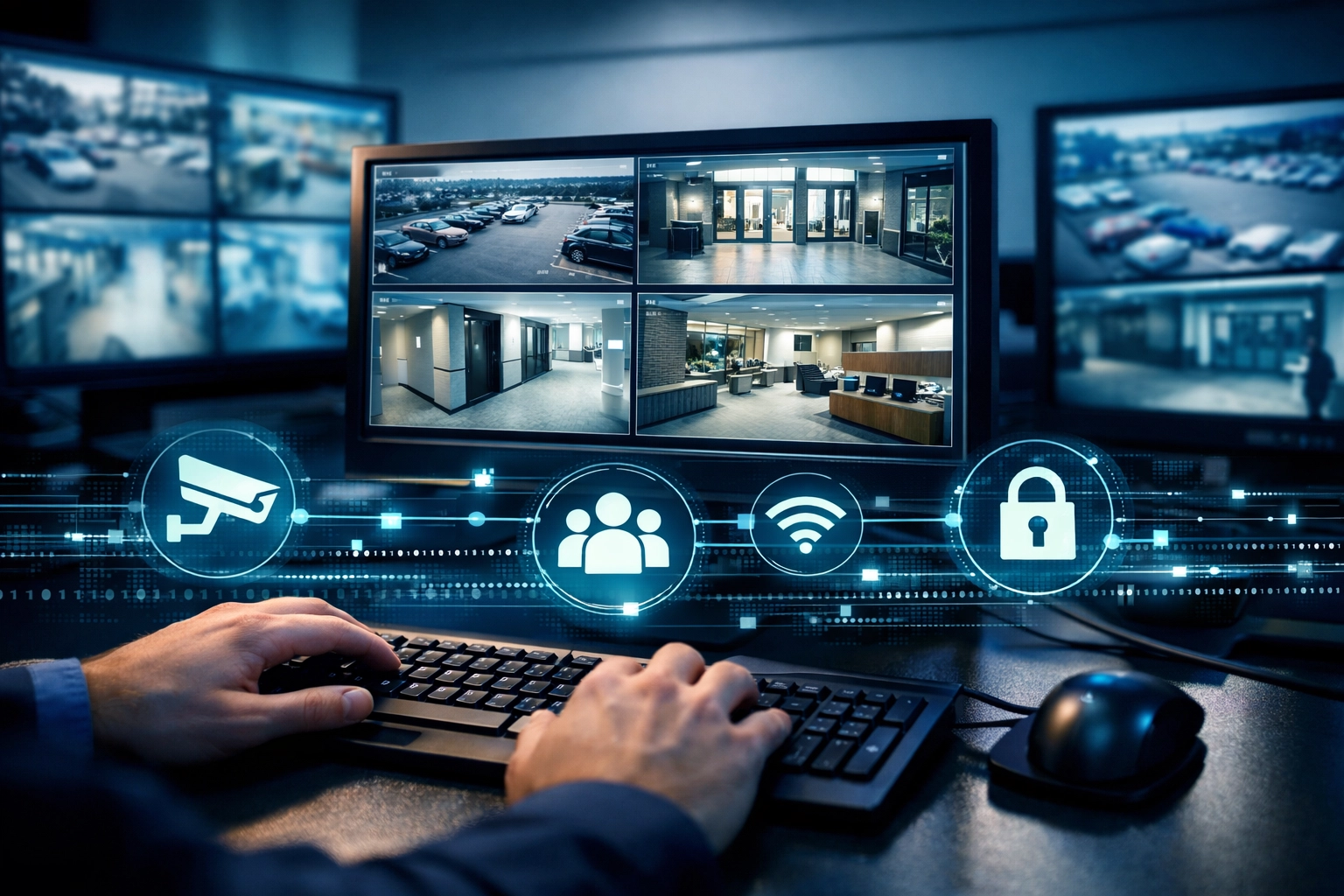
Start with the fundamentals: 911 Camera Share is an event-triggered system that activates only during active 911 calls originating from your business location. When your employee dials 911, dispatchers receive an automatic notification that camera access is available at your location. They can choose to accept this access based on the incident's needs, instantly seeing what's happening inside and around your facility in real-time.
Think of it as temporarily opening a one-way window for emergency services: they see what your cameras capture, but you maintain complete ownership and control of all recordings. Once the emergency ends and the 911 call disconnects, access terminates immediately. No footage leaves your network. Dispatchers retain nothing. Your security infrastructure remains under your sole control, exactly as it was before the emergency began.
This distinction matters tremendously for Michigan business owners concerned about data privacy and regulatory compliance. Unlike cloud-based surveillance systems that store footage on third-party servers indefinitely, 911 Camera Share grants temporary viewing access without transferring data ownership or creating permanent copies outside your control.
Why Your Legacy Security System Is Only Half-Ready
Examine your current security setup honestly. Most Michigan businesses operate with what security professionals call "reactive-only" systems: cameras that record continuously to a local network video recorder, alarm systems that trigger when sensors detect intrusions, and access control that logs entries and exits. These systems excel at documenting what happened after an incident occurs, providing valuable evidence for insurance claims and criminal investigations.
But here's the critical limitation: reactive systems provide zero value during the emergency itself. Your cameras are recording a robbery in progress, but police arrive without knowing how many suspects are inside, whether weapons are present, or which direction the suspects are moving. Your alarm system notifies the monitoring company that a door was breached, but first responders have no visual confirmation of what they're walking into when they arrive.
Legacy infrastructure creates this intelligence vacuum because it was designed in an era when real-time data transmission between private security systems and public safety networks simply wasn't possible. The technology has evolved dramatically, but most business security configurations haven't kept pace. You're sitting on incredibly valuable situational awareness data that could fundamentally improve emergency outcomes: but that data remains trapped and useless when it matters most.
How Real-Time Dispatcher Intel Changes Emergency Response
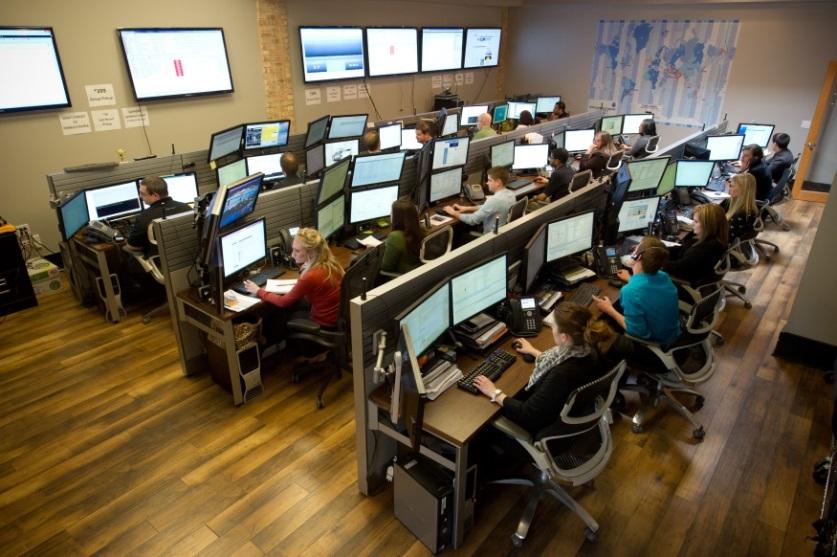
Move beyond theoretical benefits and consider the practical mechanics. When dispatchers activate 911 Camera Share access during an active emergency, they gain instant visibility into critical details that help coordinate better responses: the number of suspects or victims, presence of weapons, direction of movement, visible hazards like fire or flooding, and potential ambush points that might endanger arriving officers.
This enhanced situational awareness helps dispatchers deploy resources more efficiently. A medical emergency with clear visual confirmation of one unconscious victim receives different resources than a "multiple injuries" report where cameras reveal five people injured in a workplace accident. An intrusion alarm with camera evidence showing two suspects armed with crowbars triggers a different law enforcement response than the same alarm with visual confirmation of three suspects carrying firearms.
Use this intelligence advantage to understand the cascading effects. Better-informed first responders can approach your property with appropriate tactics, potentially de-escalating dangerous situations before they escalate further. Dispatchers can warn arriving officers about specific threats visible on camera feeds: "suspect heading toward the loading dock," "smoke visible in the northwest corner," "victim down near the front entrance": giving law enforcement critical seconds to adjust their approach and improve safety for everyone involved.
Keep your expectations measured and realistic. 911 Camera Share helps dispatchers coordinate more effective responses and can help reduce response times when visual confirmation allows faster threat assessment, but it operates as one component of comprehensive security infrastructure rather than a standalone miracle solution.
Employee Safety Benefits That Matter to Your Team
Strike a balance between security technology and human impact. For your employees, 911 Camera Share represents tangible protection that goes beyond abstract risk management. When emergencies happen: whether armed robbery, medical crisis, or fire: first responders arrive with complete visual context rather than operating on limited information from a panicked 911 caller.
Consider how this capability strengthens your safety posture across different emergency scenarios. During an active shooter situation, dispatchers can identify safe evacuation routes and direct responding officers toward the threat's location. In a medical emergency, cameras can help paramedics prepare appropriate equipment before arrival if they can see the nature of the injury. During a fire, visual confirmation of smoke locations helps firefighters plan their entry strategy while you're still evacuating employees.
Share this perspective with your team during safety training: 911 Camera Share exists as an additional layer of protection specifically designed to improve outcomes when traditional security measures aren't enough. Your alarm system detects intrusions, your access control restricts unauthorized entry, and your cameras document everything: but only 911 Camera Share ensures first responders have the situational intelligence they need to help you and your employees during the emergency itself.
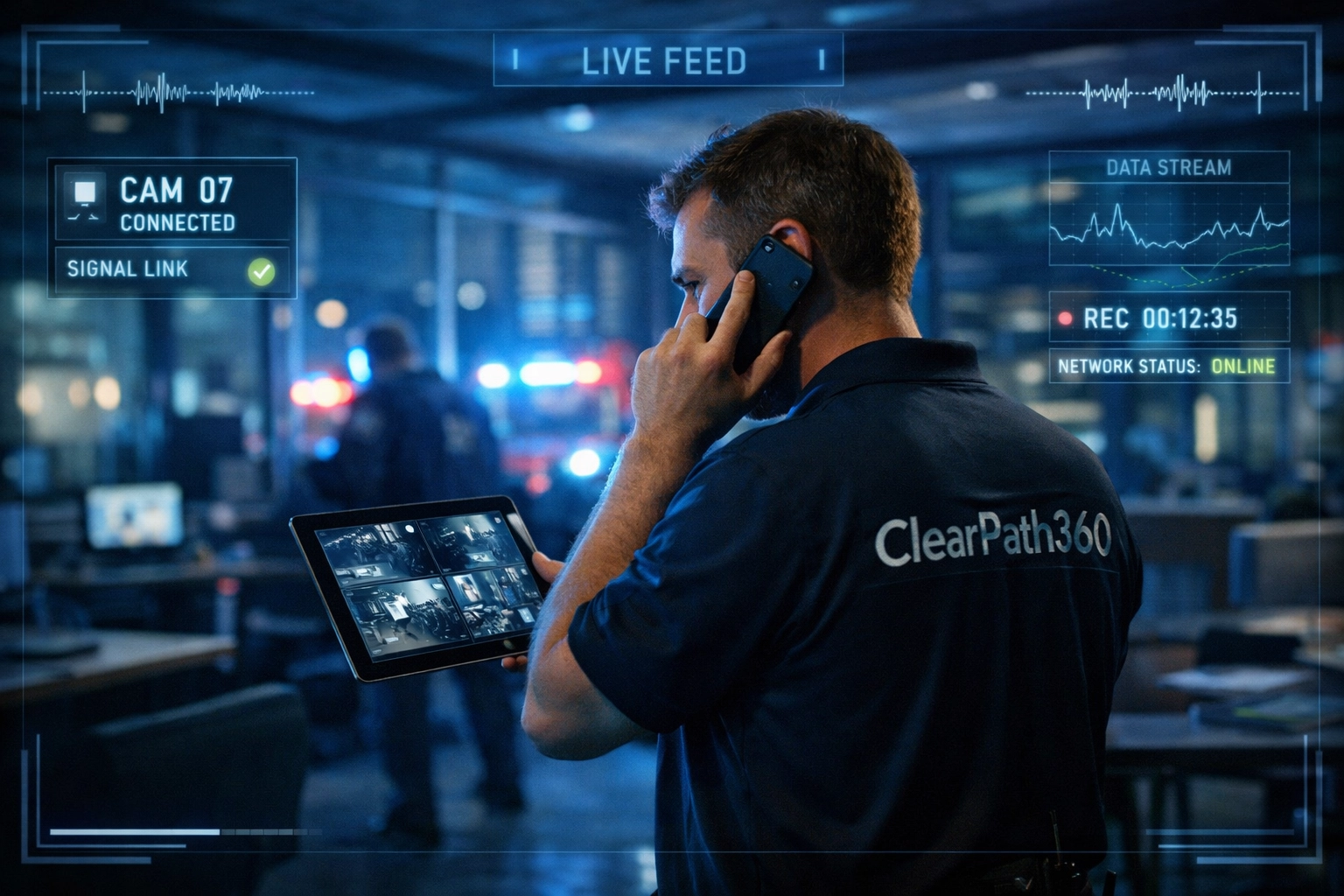
The psychological benefit shouldn't be underestimated either. Employees feel more secure knowing that emergency services won't arrive blind to an active threat. That peace of mind translates into measurable business value through improved morale, reduced turnover in industries where safety concerns drive job decisions, and stronger recruitment when candidates evaluate workplace security during hiring processes.
Insurance and Liability Protection for Michigan Business Owners
Begin with a critical legal concept: duty of care. Michigan businesses have legal obligations to provide reasonably safe environments for employees and customers. When incidents occur, liability questions often hinge on whether you took proactive steps to prevent harm and coordinate effective emergency response. Implementing 911 Camera Share demonstrates documented commitment to advanced safety infrastructure: a detail that carries substantial weight in liability discussions.
Frame this investment carefully when discussing it with your insurance provider. You're not implementing a system that guarantees specific outcomes or prevents all incidents: that would be an overreach. Instead, you're demonstrating proactive duty of care through technology that improves emergency response coordination. This distinction matters tremendously for insurance underwriting and liability exposure.
The liability protection operates on multiple levels. First, real-time visual information helps dispatchers deploy appropriate resources more efficiently, potentially reducing incident severity. Second, you maintain complete ownership of all recordings while emergency services retain nothing after calls end: critical evidence if liability questions arise, without surrendering control of sensitive business data to third parties. Third, documented proof that you implemented advanced safety measures creates a defensible position if anyone claims you failed to provide adequate security.
Use this opportunity to audit your entire security posture with fresh eyes. Does your current camera coverage provide strategically valuable views for emergency response? Are your cameras positioned to capture both perimeter activity and interior spaces where employees work? Would dispatchers benefit from seeing your parking lot, loading docks, main entrances, and primary work areas? These questions drive implementation decisions that maximize both operational security and liability protection.
Technical Integration with Axis Communications Through ClearPath IT
As you move toward implementation, understand that technical complexity happens behind the scenes while your user experience remains remarkably simple. ClearPath IT handles the complete integration process, connecting your Axis Communications camera infrastructure with 911 Camera Share systems through secure API protocols configured during initial setup.
Here's what that integration timeline typically looks like for Michigan businesses:
Week 1: Infrastructure Assessment : Your ClearPath IT team conducts a comprehensive security audit, evaluating which cameras provide strategically valuable views for emergency response. Typically, this includes exterior cameras covering parking lots and building perimeters, plus interior cameras in main work areas, break rooms, and common spaces. Private offices, restrooms, and areas with reasonable privacy expectations generally remain excluded: you maintain complete control over which feeds first responders can access.
Week 2-3: System Configuration : Technical specialists configure secure API connections between your camera network and 911 Camera Share systems, test activation protocols to ensure dispatchers receive proper notifications when 911 calls originate from your location, and establish access permissions that align with your privacy policies and operational requirements.
Week 4: Training and Documentation : Your team receives training on how the system operates, what triggers activation, and how to discuss the capability with employees transparently. ClearPath IT provides documentation for insurance discussions and compliance records.

Keep your focus on ongoing maintenance rather than one-time installation. Your managed IT services should include regular camera health monitoring, software updates that maintain compatibility with evolving 911 systems, and proactive replacement of failing cameras before they create coverage gaps during emergencies. This maintenance matters tremendously: cameras that aren't recording can't provide dispatcher intel when you need it most.
Navigating Michigan's Privacy and Consent Requirements
This is where compliance becomes critical: Michigan is a two-party consent state for audio recording, which introduces specific requirements for 911 Camera Share implementation. Video-only feeds are standard and legally straightforward: you're allowed to record video in areas where employees and customers have no reasonable expectation of privacy, which includes most business spaces except restrooms and private changing areas.
Audio recording requires different handling under Michigan's eavesdropping statutes. If your camera systems include audio capture, you need conspicuous signage informing everyone that audio recording is active in those areas. Many Michigan businesses implementing 911 Camera Share choose to disable audio on cameras entirely, simplifying compliance while maintaining all the visual intelligence benefits that dispatchers need during emergencies.
Deploy visible signage regardless of audio capture decisions. Transparency protects your business from compliance issues while maintaining employee trust. Your signage should clearly state that video surveillance is active and that camera feeds may be shared with emergency services during active 911 calls. Keep the language straightforward: employees and customers need to understand what's happening without legal jargon that creates confusion or concern.
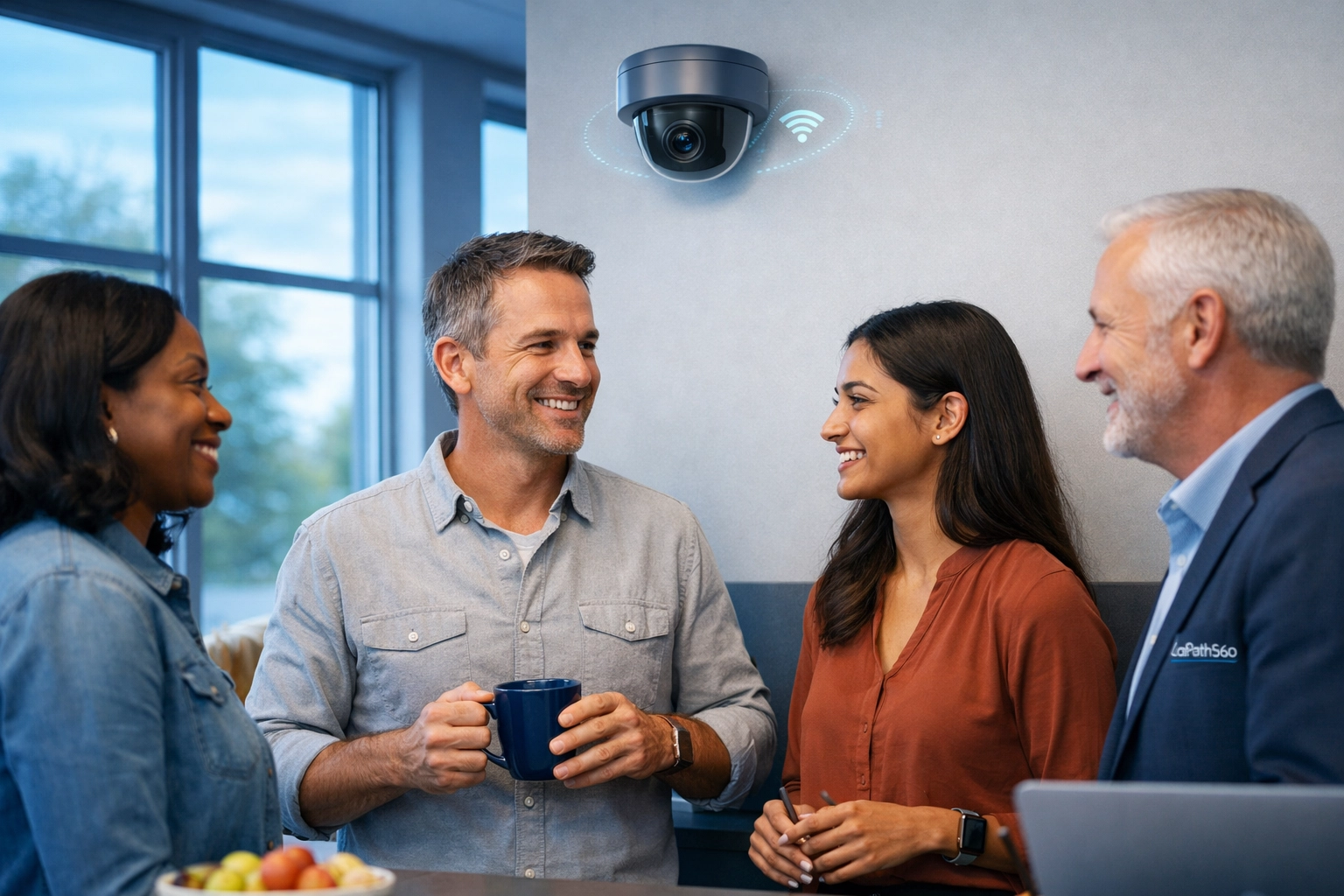
Use this privacy framework to guide your camera placement decisions. Public areas, work floors, common spaces, and building exteriors are appropriate for 911 Camera Share integration. Break rooms require careful consideration: they're monitored in most workplaces, but ensure your privacy policies address them explicitly. Private offices, medical rooms, and any space where employees have reasonable privacy expectations should remain excluded from dispatcher access unless specific business needs justify different handling.
Getting Started with 911 Camera Share Through ClearPath IT
Your next step is straightforward: schedule a security infrastructure assessment with ClearPath IT to evaluate whether your current camera systems are ready for 911 Camera Share integration or need upgrades to provide strategically valuable dispatcher intel. This assessment covers camera positioning, network capacity, recording system health, and compliance with Michigan privacy requirements.
During this evaluation, share your specific concerns and priorities. Are you most concerned about employee safety during active threats? Liability protection if incidents occur? Insurance considerations? Better coordination with local law enforcement? Your priorities shape implementation recommendations, ensuring the system aligns with your actual business needs rather than generic security templates.
Expect honest guidance about costs, timelines, and realistic outcomes. 911 Camera Share requires investment in properly positioned Axis Communications cameras, reliable network infrastructure to support real-time video transmission, and ongoing maintenance to ensure cameras remain operational when emergencies happen. But that investment delivers measurable value through improved emergency outcomes, liability protection, and peace of mind that your security infrastructure actually bridges the gap to first responders when it matters most.
Contact ClearPath IT to schedule your security infrastructure assessment and discover how 911 Camera Share can help strengthen safety and protection for your Michigan business.