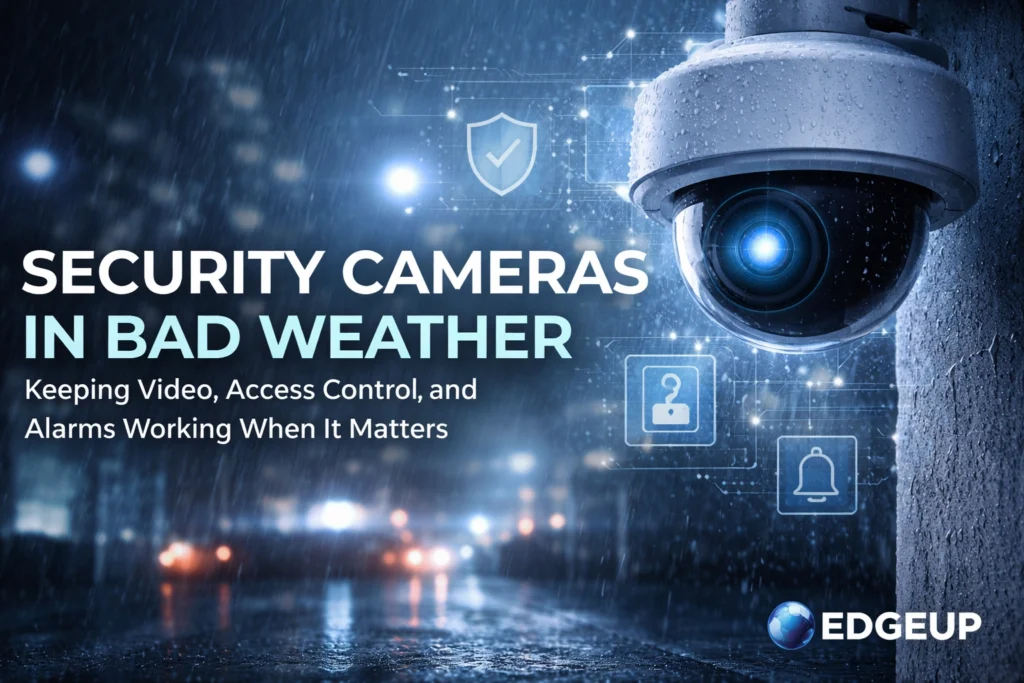
When a winter storm rolls through Michigan, your physical security systems face their toughest test. Ice builds up on camera lenses, power flickers, and temperatures plummet: all while your business sits vulnerable. Here's the reality: weather-related failures account for approximately 30% of all security camera malfunctions. That's a significant gap in protection precisely when you need it most.
Begin by understanding that your security cameras, access control panels, and alarm systems aren't just "set it and forget it" equipment. They require intentional planning, proper equipment selection, and proactive maintenance to perform reliably when Mother Nature throws her worst at your facility. This guide walks you through exactly what you need to know to keep your physical security infrastructure running strong through ice storms, power outages, and bitter cold.
Understanding How Winter Weather Attacks Your Security Systems
Before you can protect your equipment, you need to understand exactly what you're up against. Use this section to identify the specific threats your systems face during severe winter weather.
Snow and Ice Accumulation
Snow doesn't just block your camera's view: it creates a cascade of problems. Ice can freeze mechanical parts in PTZ (pan-tilt-zoom) cameras, completely disabling their movement capabilities. Snow reflects light and causes glare that degrades image quality, while the weight of ice buildup can actually damage mounting brackets over time. High winds associated with winter storms destabilize mounted cameras, resulting in shaky, unusable footage.
Extreme Cold
Most security cameras are factory-rated only to -22 degrees Fahrenheit. When temperatures drop below this threshold, internal components can fail, batteries drain faster, and image sensors may produce distorted video. Your NVR (Network Video Recorder) housed in an unheated utility closet? It's particularly vulnerable.
Moisture Infiltration
When seals wear out or weren't properly rated for your environment from the start, moisture seeps into camera housings. This leads to short circuits, foggy lenses, and corrosion that shortens equipment lifespan. Water droplets also reflect infrared light, creating glare that triggers false motion detection alerts and degrades night vision performance.
Selecting Weather-Rated Equipment That Actually Performs
This is where your purchasing decisions make or break your winter resilience. Keep your focus on specifications that matter for harsh conditions.
IP Ratings: Your First Line of Defense
Select cameras with appropriate IP (Ingress Protection) ratings for weather resistance. An IP66 rating should be your minimum standard for outdoor cameras: this means the unit is fully protected against dust and can withstand powerful jets of water from any direction. For locations prone to flooding or heavy snow accumulation, consider IP67 or IP68 rated equipment that can handle temporary water immersion.
Cold-Rated Hardware
Standard cameras struggle below -22°F, but cold-rated models with built-in heaters can operate reliably in temperatures as low as -40°F. Studies show that cameras with integrated heaters and advanced IR technology achieve 40% higher performance rates in snowy conditions compared to standard cameras. When you're specifying equipment for Michigan winters, this isn't a luxury: it's a necessity.
Smart IR and AI-Enhanced Detection
Strike a balance between sensitivity and reliability in your motion detection. Adaptive IR functionality with smart adjustments prevents overexposure in fog or snow conditions. Motion detection with AI person and vehicle recognition filters out false alarms triggered by falling snow, swirling leaves, or heavy rain: focusing alerts only on genuine security threats.
Power Backup: The Foundation of Storm Resilience
Your security system is only as reliable as its power source. When the grid goes down during a winter storm, everything you've invested in becomes useless without proper backup power. Share this reality with your team: power protection isn't optional.

Uninterruptible Power Supplies (UPS)
Begin by installing UPS units for your NVRs, access control panels, and alarm systems. A properly sized UPS provides enough runtime to bridge short outages and allows for graceful shutdown during extended outages: preventing data corruption and equipment damage. For critical systems, calculate your power requirements and size your UPS to provide at least 30 minutes of runtime.
PoE (Power over Ethernet) Advantages
PoE cameras receive both data and power through a single Ethernet cable, simplifying your backup power strategy. Instead of backing up power at each camera location, you protect the centralized PoE switch. This approach also reduces points of failure and makes maintenance more manageable.
Cellular Backup for Communication
When storms take down internet connectivity, your cloud-connected cameras and monitoring services lose their lifeline. Cellular backup ensures your alarm signals still reach your monitoring center and you maintain remote access to critical systems. This redundancy can mean the difference between a documented incident and a complete security blind spot.
Installation and Maintenance Strategies That Pay Off
Even the best equipment fails without proper installation and ongoing maintenance. Use this space to evaluate your current practices against these proven strategies.
Protective Placement
Install cameras under eaves, overhangs, or protective housings to shield them from direct snow and rain exposure. This simple step significantly extends camera lifespan and reduces maintenance requirements. Position cameras at angles that minimize snow accumulation on lenses while maintaining optimal coverage.
Secure Mounting for High Winds
Use anti-vibration mounts and ensure rock-solid installation to maintain image stability during storms. Regularly check and tighten mounts: temperature fluctuations cause metal to expand and contract, gradually loosening connections over time.
Scheduled Maintenance Before Storm Season
Don't wait for a storm warning to discover problems. Schedule a comprehensive inspection of all outdoor security equipment before winter arrives:
- Clean camera lenses and housings
- Test heater functionality on cold-rated cameras
- Verify all weatherproof seals are intact
- Check mounting brackets for corrosion or loosening
- Test backup power systems under load
- Confirm cellular backup connectivity
- Update firmware to ensure quick recovery after power fluctuations

Your Winter Storm Physical Security Checklist
As you move toward implementing these strategies, use this checklist to evaluate your current state and prioritize improvements:
Equipment Assessment
- All outdoor cameras rated IP66 or higher
- Cold-rated cameras with heaters installed in exposed locations
- NVRs and access control panels in climate-controlled spaces
- AI-enhanced motion detection enabled to reduce false alarms
Power Protection
- UPS units protecting NVRs, access control panels, and alarm systems
- UPS batteries tested and replaced on schedule
- PoE switches on backup power
- Cellular backup configured and tested for alarm communication
Installation Verification
- Cameras positioned under protective cover where possible
- Anti-vibration mounts installed on all outdoor cameras
- All mounting hardware inspected and tightened
- Weatherproof seals inspected and intact
Maintenance Completed
- Pre-season inspection performed
- Firmware updated on all devices
- Backup power systems tested under load
- Emergency procedures documented and staff trained
"The best time to prepare for a winter storm was last month. The second best time is right now."
Moving Forward: Building True Resilience
This is where preparation meets reality. The systems you've invested in protecting your people and property deserve the same attention during extreme weather that they provide every other day of the year. When the next winter storm hits, you want confidence that your cameras are recording, your access control is functioning, and your alarms are communicating: not crossing your fingers and hoping for the best.
As an Axis Communications certified partner, ClearPath360 specializes in designing, installing, and maintaining physical security systems that perform reliably in Michigan's demanding climate. From cold-rated camera selection to comprehensive backup power solutions, we help businesses build security infrastructure that doesn't take snow days.
Ready to assess your physical security resilience before the next storm? Schedule a consultation with our team to identify gaps and build a plan that keeps your systems running when it matters most.