
Picture this: It's Monday morning, your coffee's still hot, and your team is firing on all cylinders. Then suddenly, your server crashes. Emails stop flowing. Your CRM goes dark. Everything grinds to a halt while you scramble to figure out what went wrong.
Now imagine a different scenario: That same server issue gets detected and fixed at 2 AM on Sunday: before you even knew there was a problem. Your Monday morning stays productive, your team stays focused, and your business keeps moving forward.
That's the power of proactive monitoring, and it's exactly why smart small businesses are ditching the "wait and see" approach to IT management.
What Proactive Monitoring Actually Means
Begin by understanding that proactive monitoring isn't just fancy tech jargon: it's a fundamental shift in how your IT infrastructure gets managed. Instead of waiting for something to break and then fixing it, proactive monitoring continuously watches your systems 24/7, identifying potential issues before they become business-stopping disasters.
Think of it like having a health monitor for your entire IT ecosystem. Just as a fitness tracker alerts you to irregular heartbeats before you feel chest pain, proactive IT monitoring catches server slowdowns, security threats, and network bottlenecks before they impact your operations.

Organizations using proactive IT monitoring report 98% fewer system outages than those still stuck in reactive mode. That's not a typo: we're talking about nearly eliminating unplanned downtime entirely.
The Mechanics: How Prevention Actually Works
Share this reality with your team: Modern proactive monitoring operates through sophisticated Remote Monitoring and Management (RMM) tools that never sleep. These systems continuously track everything from CPU usage and memory consumption to network traffic patterns and security events.
Use this understanding to appreciate what's happening behind the scenes. When your monitoring system detects that a server's memory usage is climbing toward dangerous levels, it doesn't wait for the crash. Instead, it either automatically resolves the issue: clearing unnecessary processes or reallocating resources: or immediately alerts technicians who can intervene before problems escalate.
Keep your expectations realistic about what this looks like in practice. Your monitoring dashboard might show alerts like "Server ABC memory at 85% capacity" or "Unusual login attempts detected from unknown IP." These early warnings create opportunities for prevention rather than emergency response.
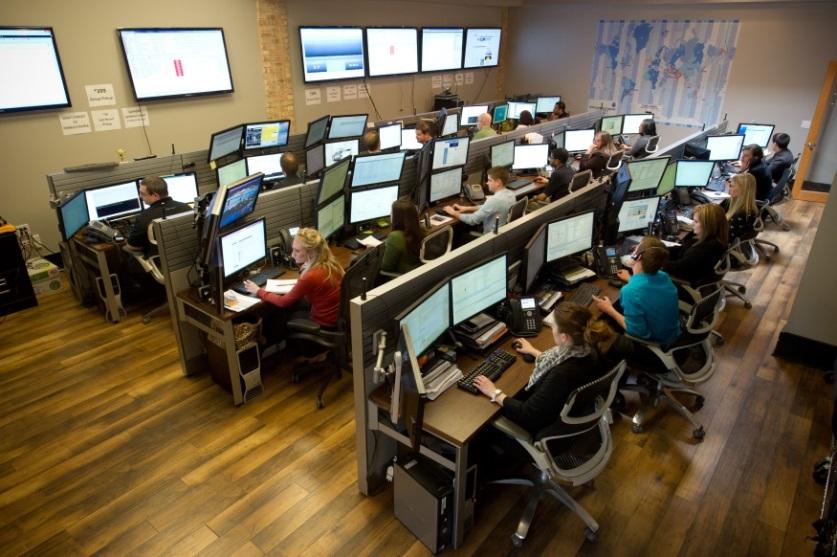
Strike a balance between understanding the technical complexity and appreciating the simple outcome: issues get resolved before they affect your business. Most of the time, you'll never even know something could have gone wrong.
The Real Impact on Your Bottom Line
As you move toward evaluating proactive monitoring for your business, consider these hard numbers. Organizations lose an average of $5,600 per minute during unplanned downtime. For a small business, even a two-hour outage can cost over $650,000 in lost productivity, revenue, and customer trust.
Begin calculating your own risk by thinking about what happens when your systems go down:
- How many employees can't work effectively?
- What customer interactions get delayed or lost?
- How long does it take to identify and fix problems?
- What's the reputational cost of appearing unreliable?

Use this perspective to understand why IT teams using proactive monitoring resolve issues 40% faster than reactive teams. When you know about problems before they become crises, you're working from a position of control rather than panic.
This is where the math becomes compelling for small businesses. Instead of paying emergency rates for weekend server repairs or losing entire days of productivity, proactive monitoring transforms IT from a cost center into a business enabler.
Why Small Businesses Need This More Than Anyone
Share this truth: Large enterprises have dedicated IT teams and redundant systems that can absorb some downtime. Small businesses don't have that luxury. When your single server goes down or your network gets compromised, there's no backup team to handle the crisis while operations continue.
Keep your focus on what this means practically. Small businesses typically operate with leaner margins and can't afford the financial hit of extended downtime. You also probably don't have a full-time IT person sitting in your office, which means problems often go undetected until they've already caused damage.

Begin thinking about proactive monitoring as your invisible IT department: one that never takes vacation days, never misses warning signs, and never sleeps through potential problems. This level of coverage becomes your competitive advantage, ensuring your systems are more reliable than those of competitors still operating in reactive mode.
Use this understanding to recognize that proactive monitoring levels the playing field. You get enterprise-grade reliability without needing enterprise-scale resources.
How ClearPath360 Makes Prevention Simple
As you evaluate managed IT partners, understand what comprehensive proactive monitoring actually includes. At ClearPath360, our approach integrates continuous system monitoring with automated threat response and regular preventive maintenance.
Begin by recognizing that effective monitoring goes beyond just watching servers. Our systems track:
- Network performance and security events
- Endpoint protection across all devices
- Software updates and patch management
- Backup integrity and disaster recovery readiness
- User behavior analytics for security threats

Share this expectation with your team: Most issues get resolved before anyone notices. Our automated systems handle routine maintenance, security updates, and minor performance optimizations without disrupting your workflow. When human intervention is needed, our technicians are already working on solutions before problems impact productivity.
Strike a balance between appreciation for the technology and understanding the business value. You're not just buying monitoring software: you're investing in business continuity, employee productivity, and customer satisfaction.
Moving Beyond the Break-Fix Mentality
This is where you make the crucial shift from thinking about IT as something you deal with when it breaks to viewing it as infrastructure that consistently enables growth. Proactive monitoring represents this fundamental change in approach.
Begin by acknowledging that the traditional break-fix model made sense when technology was simpler. But today's interconnected systems, cloud dependencies, and cybersecurity threats require continuous oversight. Waiting for problems to appear before addressing them is like driving blindfolded and hoping for the best.
Use this opportunity to position your business for sustainable growth. When your IT infrastructure operates reliably in the background, your team can focus on serving customers, developing products, and expanding market reach instead of troubleshooting technical problems.
Keep your expectations aligned with what's possible: Proactive monitoring doesn't eliminate all IT issues, but it dramatically reduces their frequency and severity. More importantly, it transforms how your business relates to technology: from source of stress to foundation for success.
The question isn't whether your small business can afford proactive IT monitoring. The real question is whether you can afford to keep operating without it. Every day you wait is another opportunity for preventable downtime to impact your bottom line and customer relationships.
Ready to explore how proactive monitoring can protect your business? Contact ClearPath360 to discuss your specific needs and discover what 24/7 peace of mind looks like for your operations.