When seconds count during an emergency, your security cameras are already recording everything. But here's the question most Michigan business owners haven't considered: Can 911 dispatchers actually see what your cameras see when your team calls for help?
For most businesses, the answer is no. Your cameras are locked behind your network, accessible only through your DVR or cloud portal. Meanwhile, first responders are driving blind, making critical decisions based solely on a panicked phone call and whatever information your employee can communicate under stress.
This gap isn't just frustrating. It's dangerous. And it's completely unnecessary.
The Bridge Your Business Has Been Missing
Begin by understanding what's actually happening when someone from your business dials 911 during an active threat. Your employee is trying to describe what they're seeing while simultaneously trying to stay safe. The dispatcher is relaying second-hand information to responding units. Officers are arriving with limited intelligence about what they're walking into.
Now imagine this instead: The dispatcher sees your camera feeds in real-time. They're watching the suspect's location, clothing, movements. They're counting how many people are involved. They're directing officers to the exact entry point where the threat isn't located. They're telling your employees where to shelter based on what they can actually see unfolding.
That's 911 Camera Share through ClearPath IT: and it's already protecting Michigan businesses in Livingston County and Fenton.
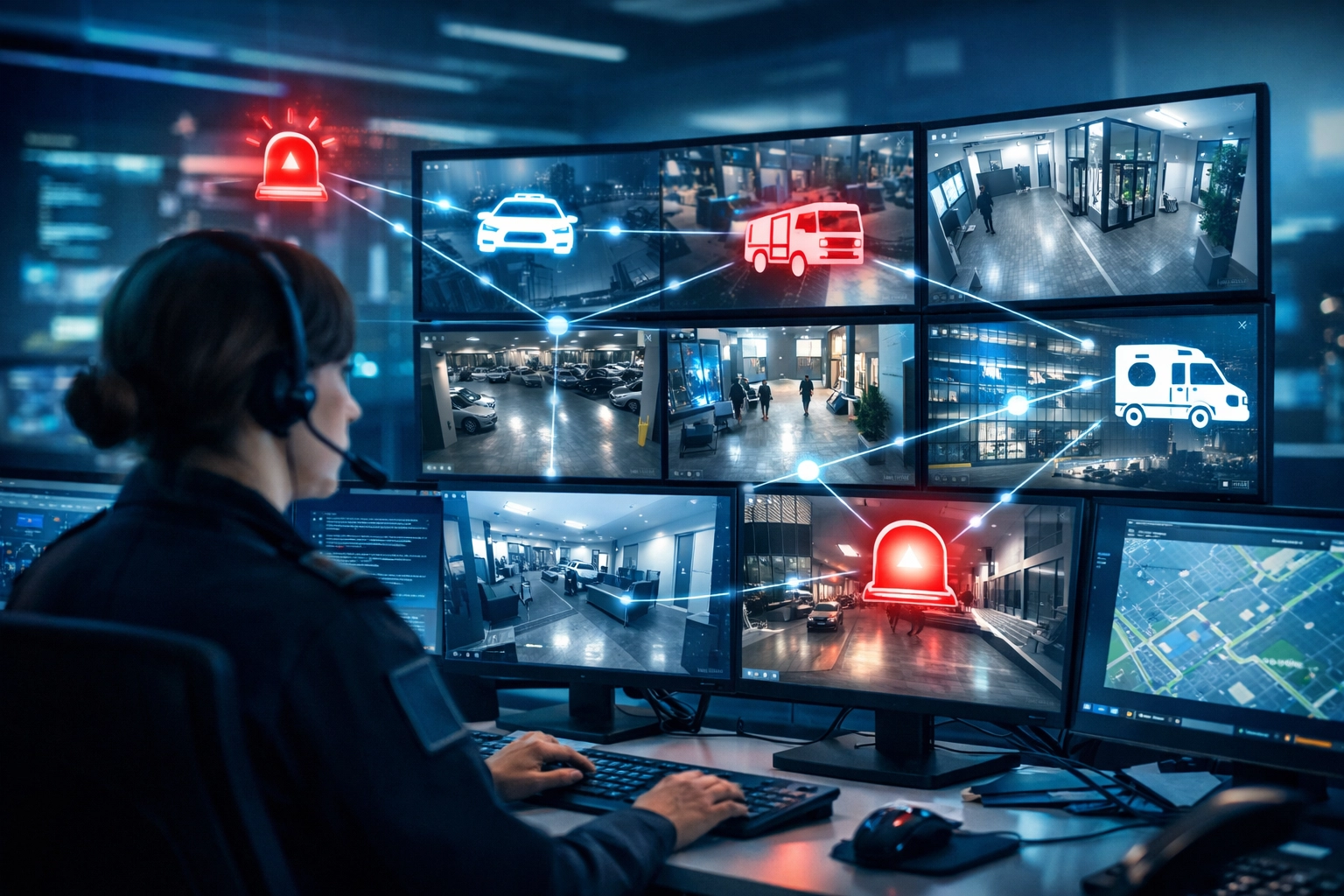
This isn't some futuristic concept. It's operational right now, bridging the gap between your Axis Communications cameras and county 911 dispatch centers. When your team makes that emergency call, dispatchers can pull live feeds from cameras within approximately 100 yards of the caller's location. Not recordings. Not footage from five minutes ago. Live video of what's happening right now.
Why Your "Fully Monitored" System Is Only Half-Ready
Your current alarm system might be monitored by a central station. You might even have remote access to your cameras on your phone. That's good: but it's not enough when an actual emergency unfolds inside your building.
Here's what most legacy security setups are missing: Direct connectivity to public safety answering points (PSAPs): the technical term for your county's 911 dispatch center. Your cameras and your alarm panel are talking to private monitoring companies, but they're not talking to the people who dispatch police, fire, and EMS.
Think about the chain of events with traditional monitoring:
- Alarm triggers or employee calls private monitoring company
- Monitoring company verifies and calls 911
- 911 dispatcher takes the call and dispatches units
- Officers arrive without visual intelligence
That's three handoffs before anyone with response authority even knows what's happening. Each handoff adds delay. Each handoff loses information. And nobody responding has eyes on the actual situation.
Small business IT teams often implement excellent network security and managed services: firewalls, access control, even sophisticated Axis camera systems: but they're not thinking about emergency response integration. That's where the gap lives, and it's a gap that costs response time when your people need help most.
Real-Time Intel That Helps Dispatchers Make Smarter Decisions
Use this understanding to appreciate what changes when dispatchers can actually see your camera feeds during an emergency. They're no longer relying on an employee's description of "a guy in dark clothes." They're watching that person in real-time and can describe exactly what responding officers are looking for.

The intelligence advantage works across every emergency scenario:
Active threats: Dispatchers can distinguish between a shoplifting incident and an armed robbery before units arrive. This helps law enforcement respond with appropriate force levels and tactical approaches based on actual threat assessment, not assumptions.
Medical emergencies: EMS teams know whether they're responding to a single-victim situation or potential mass casualty event. Dispatchers can provide real-time CPR guidance to your employees while watching the camera feed to ensure they're positioned correctly.
Fire response: Firefighters can assess smoke conditions, identify potential entry points, and understand building occupancy before making entry decisions that put their lives at risk.
Directional intelligence: This is where the system truly shines. When a suspect flees, dispatchers can tell responding units exactly which direction they went, what they're wearing, whether they got into a vehicle, and where they were last seen. That real-time guidance can help officers establish perimeter coverage and containment strategies based on actual movement, not guesswork.
It's not just about faster response: it's about smarter response. And that matters enormously when your team is counting on help to arrive with the right information.
Your Employees' Safety Advantage You Haven't Considered
Strike a balance between security technology and human safety by recognizing this truth: Your employees don't need to be heroes during an emergency. They need to survive it.
911 Camera Share changes the safety calculus for your team in ways most business owners haven't considered. When dispatchers can see your camera feeds, your employees don't need to stay on the phone describing everything that's happening. They don't need to peek around corners to give updates. They don't need to put themselves at risk to be the eyes for first responders.
They can shelter, lock down, and get to safety: while dispatchers maintain visual awareness through your camera network.
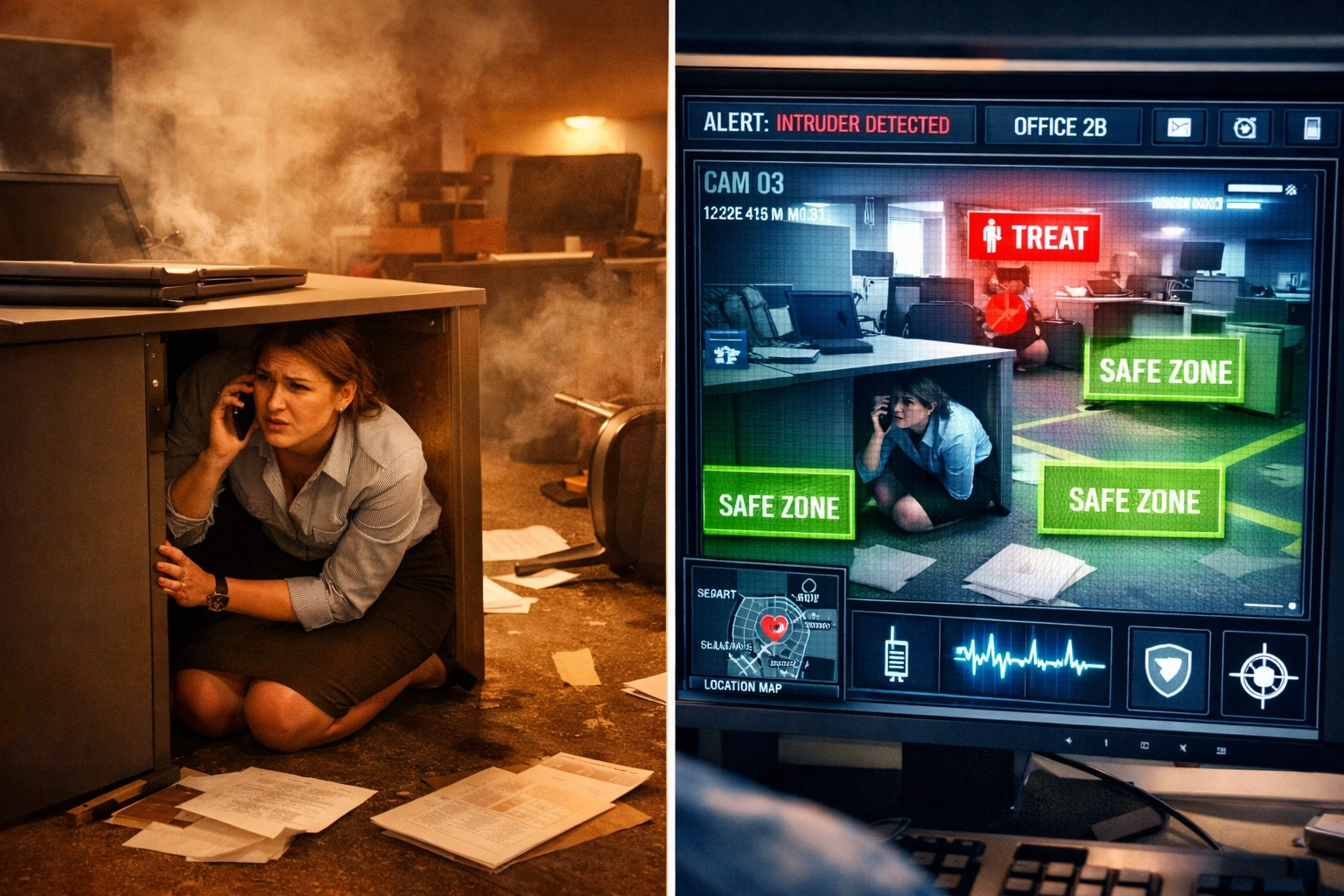
This isn't a minor point. In active shooter situations, workplace violence incidents, or armed robberies, employee behavior often determines survival outcomes. Employees who try to monitor the threat, who stay exposed to provide information, who make themselves targets while trying to help: these are the people who get hurt.
With 911 Camera Share integration through ClearPath IT, your cameras do that job. Your people can focus entirely on their own safety while trained dispatchers maintain situational awareness and guide first responders to the right locations with the right intel.
For Michigan businesses where employee safety is a top priority: schools, healthcare facilities, retail operations, manufacturing sites: this capability represents a fundamental shift in emergency response philosophy.
The Insurance and Liability Conversation You Should Be Having
Keep your focus on the risk management implications that most small business IT discussions overlook entirely. When you're integrating managed IT services with physical security systems like Axis Communications cameras and access control, you're building infrastructure. But that infrastructure also creates a liability profile.
Ask yourself: If something happens at your facility, what will the investigation reveal about your preparation level?
Insurance carriers are increasingly evaluating whether businesses have taken reasonable steps to protect employees and visitors. Having cameras is good. Having monitored alarm systems is better. But having emergency response integration that helps first responders access real-time intelligence: that's a documented capability that demonstrates serious risk mitigation.
This matters during claims investigations and liability assessments. When you can show that your security infrastructure was actively assisting emergency response during an incident, you're demonstrating due diligence. You're showing that your business took proactive steps beyond basic compliance.
Some Michigan insurance carriers are already asking about emergency response capabilities during policy underwriting. That conversation is only going to intensify as 911 Camera Share adoption spreads across the state. Early adopters aren't just gaining operational advantages: they're positioning themselves favorably for future insurance discussions and risk assessments.
How ClearPath360 Makes the Technical Integration Actually Work
This is where most 911 Camera Share discussions lose small business owners: the technical complexity of making it happen. You need someone who understands both sides: managed IT services and physical security integration.
Here's what the integration actually requires:
Network architecture that supports emergency access: Your cameras need to be on a properly segmented network that can provide secure, encrypted pathways to dispatch centers during active 911 calls: without compromising your business network security or exposing your cameras to unauthorized access.
Axis Communications platform compatibility: The system works through partnerships between Eagle Eye Networks and RapidSOS, creating the technical bridge to PSAPs. But your camera infrastructure needs to be compatible and properly configured. ClearPath360 specializes in Axis Communications deployments specifically because they meet the technical requirements for this kind of emergency integration.
Privacy protections built into the architecture: This is critical and often misunderstood. Dispatchers cannot access your cameras outside of active 911 emergencies. They can't browse historical footage. They can't review recordings during non-emergencies. They can't access feeds after an incident concludes. The system activates only during verified emergency calls from your location, then automatically disconnects when the emergency ends.
Help desk support that understands the stakes: When you're integrating life-safety systems with IT infrastructure, you need managed services support that recognizes the difference between "the printer's down" and "emergency response capabilities are offline." ClearPath360's help desk treats physical security integration with the same priority level as cybersecurity and network security: because the consequences of failure are equally serious.
Coordination with county 911 centers: Implementation isn't just about technology: it's about relationships. ClearPath360 works directly with Michigan PSAPs to ensure your cameras integrate properly with their dispatch protocols and that they're trained on accessing your specific camera locations during emergencies.
This isn't a DIY project. It's not something your existing IT vendor can add on unless they have specific experience with physical security integration and emergency response systems. It requires expertise that spans managed IT, network security, access control, and public safety communication protocols.
Getting Started With 911 Camera Share in Michigan
As you move toward implementing this capability for your business, start by assessing where you are today. Do you have Axis Communications cameras already? Is your network architecture segmented appropriately? Are you working with a managed services provider who understands physical security integration?
If you're already a ClearPath360 client with Axis camera systems, you're closer than you think. If you're starting from scratch, the conversation begins with understanding your facility layout, your current security posture, and your business's specific risk profile.
The technology exists. The public safety infrastructure is being built across Michigan. The question is whether your business will be ready when it becomes available in your county: or whether you'll be scrambling to catch up after everyone else has already gained the advantage.
Your cameras are already watching. They're already recording. The next evolution is making sure they're actually helping when emergencies happen.
Ready to explore how 911 Camera Share through ClearPath IT can protect your Michigan team? Let's talk about your specific facility and timeline. We'll assess your current infrastructure, identify what needs to happen for emergency response integration, and build you a roadmap that makes sense for your business and budget.
Because when your team calls 911, first responders should have every advantage possible to respond smarter, faster, and more effectively. Your security cameras can provide that advantage( if they're integrated correctly.)