Let's cut straight to the question that's probably been nagging at you: Is 24/7 managed IT support actually worth it for your small business, or is it just another expense eating into your bottom line?
Begin by asking yourself this, when was the last time something went wrong with your technology outside of normal business hours? Maybe your email server crashed on a Saturday morning, or your point-of-sale system decided to take a vacation right before a busy Monday. If you're nodding along, you already understand the frustration. Now imagine having someone in your corner, ready to fix those problems the moment they happen.
This is where we separate the marketing fluff from the real value proposition. By the end of this post, you'll have a clear framework for deciding whether 24/7 managed IT support makes sense for your specific situation.
Understanding What 24/7 Managed IT Actually Means
Before diving into the "should you or shouldn't you" debate, let's make sure we're on the same page about what 24/7 managed IT support actually delivers.
Think of it as having a dedicated IT department that never sleeps. Your systems are continuously monitored for issues, security threats are identified and addressed in real-time, and when something breaks at 2 AM, there's a real person ready to jump in and fix it.
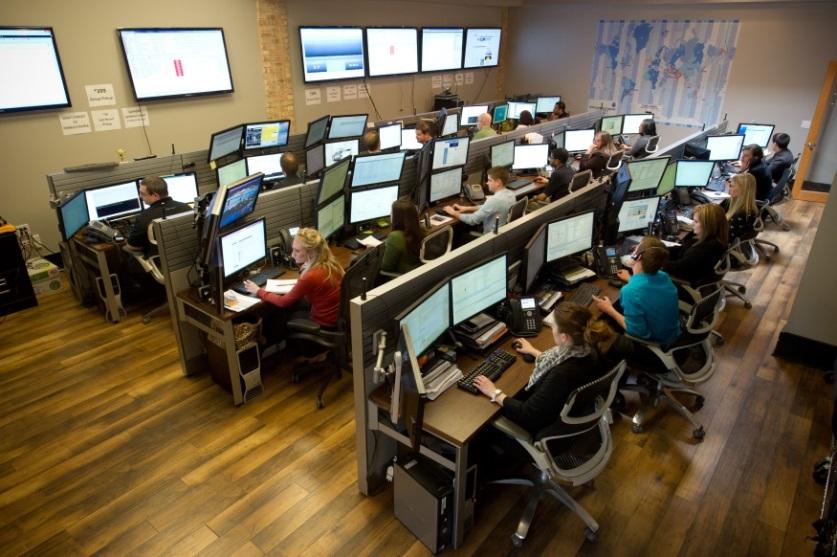
Use this mental image: IT specialists watching multiple screens, tracking network performance, cybersecurity threats, and system health around the clock. That's proactive protection working for you even while you're catching up on sleep.
The key distinction here is between reactive and proactive support. Traditional IT help fixes things after they break. Managed IT services with 24/7 monitoring catch problems before they become catastrophic, often before you even notice something's wrong.
The Real Cost of Downtime (And Why It Matters More Than You Think)
Here's where the rubber meets the road. Share this reality check with yourself: small businesses can lose thousands of dollars per hour during IT outages. That's not a scare tactic, it's just math.
Consider what happens when your systems go down:
- Lost sales from customers who can't complete transactions
- Productivity drain as employees sit idle or scramble with workarounds
- Reputation damage when clients can't reach you or experience service interruptions
- Recovery costs that escalate the longer problems go unaddressed
"Issues caught early cost less to fix than problems discovered after they've caused damage."
Keep this principle front and center as you evaluate your needs. A server failure on a Friday evening without 24/7 support means the problem sits until Monday morning, potentially 60+ hours of compounding issues, frustrated customers, and lost revenue.
Strike a balance in your thinking here. Yes, 24/7 support is an ongoing expense. But compare that predictable monthly cost against the unpredictable financial hit of extended downtime. For many small businesses, the math clearly favors prevention over emergency repairs.
When 24/7 Support Becomes Essential (Not Optional)
This is where you need to honestly assess your business operations. Use these questions as your guide:
Do you operate outside traditional 9-to-5 hours? If your e-commerce site runs 24/7, if you have employees working evenings or weekends, or if your customers expect round-the-clock access to your services, standard business-hours IT support leaves dangerous gaps.
How dependent is your revenue on digital systems? The more your business relies on technology to generate income, the more critical continuous monitoring becomes. A retail store with a simple cash register has different needs than a company running complex inventory management, online ordering, and customer databases.
Do you handle sensitive customer data? Small businesses are increasingly targeted by cybercriminals specifically because they often lack continuous threat monitoring. If you're storing customer financial information, health records, or other sensitive data, around-the-clock security monitoring isn't a luxury, it's a responsibility.

What's your internal IT capacity? Here's an honest assessment most small business owners need to make: you probably don't have dedicated IT staff. And even if you have a tech-savvy employee who handles IT issues part-time, they're not monitoring your systems at 3 AM.
The Affordability Factor: How Small Businesses Access Enterprise-Level Protection
Let's address the elephant in the room, budget concerns. You might be thinking that 24/7 IT support sounds great in theory, but surely it's priced for larger companies with deeper pockets.
Here's the truth that levels the playing field: hiring in-house IT staff to monitor systems around the clock is absolutely prohibitively expensive. We're talking multiple full-time salaries, benefits, training, and the infrastructure to support them. That's simply not realistic for most small businesses.

Managed IT providers change this equation entirely. By serving multiple clients, they can deliver enterprise-level monitoring, advanced security tools, and expert teams at predictable monthly rates that small businesses can actually afford.
Research shows that 46% of companies identify predictable monthly costs as a key benefit of managed IT services. Instead of budget-busting emergency repair bills that seem to hit at the worst possible times, you get a flat rate that makes financial planning straightforward.
"Managed IT support isn't merely an expense, it's insurance against costly downtime, a security necessity, and a strategic advantage that enables growth."
Making the Decision: A Framework for Your Business
As you move toward your final assessment, use this framework to guide your thinking:
Tier 1: You Probably Need 24/7 Support If:
- Your business generates revenue through online channels
- You operate in healthcare, finance, legal, or other regulated industries
- Downtime of even a few hours would significantly impact customer relationships
- You've experienced IT emergencies outside business hours in the past year
- Cybersecurity is a growing concern for your industry
Tier 2: Standard Business-Hours Support Might Suffice If:
- Your operations are strictly 9-to-5 with no digital revenue streams
- You have minimal technology infrastructure
- Brief downtime wouldn't materially impact your business
- You have robust backup systems and can tolerate delayed issue resolution

Be honest with yourself during this evaluation. Many business owners underestimate their technology dependence until a crisis reveals just how central it's become to daily operations.
The Strategic Advantage You Might Be Missing
This is where the conversation shifts from defense to offense. Yes, 24/7 managed IT support protects you from problems. But it also unlocks growth opportunities you might not have considered.
When your technology infrastructure is solid and continuously monitored, you can:
- Confidently expand your online presence knowing you have support backing it up
- Take on clients with more demanding technical requirements
- Focus on actually running your business instead of worrying about IT fires
- Scale your operations without proportionally scaling your IT headaches
Think of it as removing a ceiling from your growth potential. The businesses that outpace their competitors often have one thing in common: they've eliminated technology limitations as a bottleneck.
Your Next Step
You've now got the framework to make an informed decision about 24/7 managed IT support. The question isn't really whether you can afford it: it's whether you can afford the alternative.
If you're ready to explore what continuous IT support would look like for your specific situation, reach out to our team for a straightforward conversation about your needs. No pressure, no technical jargon: just honest guidance on whether we're the right fit for your business.
And if you're still on the fence, that's okay too. Bookmark this page, take some time to assess your actual technology dependence, and revisit the framework above. The right decision is the informed one.
Your business deserves technology that works for you around the clock. The only question is whether you're ready to make that happen.