Picture this: It's Monday morning, your email server crashes, and your entire team sits idle for three hours waiting for your IT support to "get back to you." Sound familiar? You're not alone: and more importantly, you don't have to accept this as normal business operation anymore.
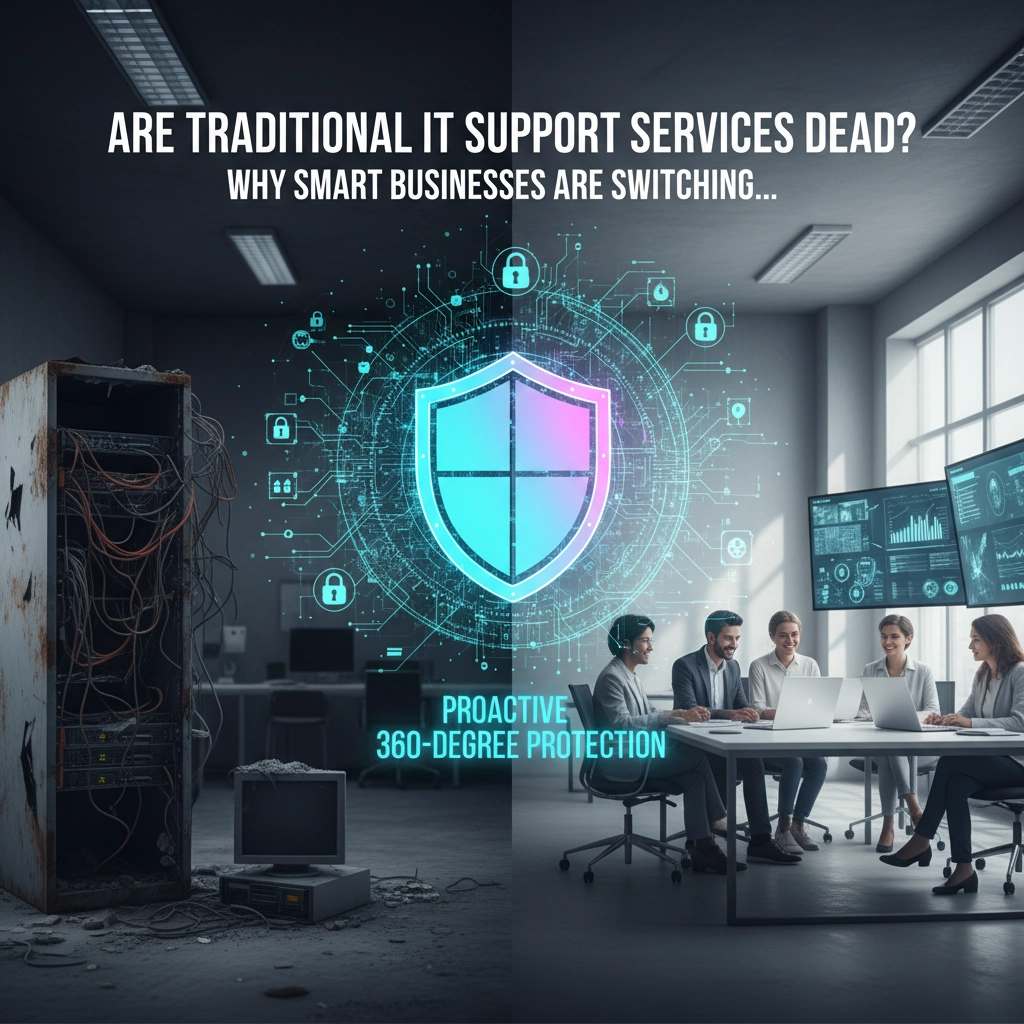
Begin by examining what's happening across industries right now. Smart business leaders are abandoning the traditional break-fix IT model in droves, recognizing that reactive support isn't just outdated: it's actively holding their companies back. The shift toward proactive 360-degree protection represents more than a trend; it's a fundamental reimagining of how technology should serve your business goals.
The Hard Truth About Traditional IT Support Models
Use this moment to assess your current IT support honestly. Traditional IT services operate on what we call the "break-fix" mentality: technicians show up after something goes wrong, patch the immediate problem, and leave until the next crisis strikes. This approach creates a perpetual cycle of firefighting that costs you far more than the monthly service fees suggest.
Consider the hidden costs accumulating in your business right now. Every minute of downtime translates to lost productivity, frustrated customers, and missed opportunities. When your point-of-sale system fails during peak hours or your communication tools crash before an important client presentation, you're not just paying for emergency repairs: you're hemorrhaging revenue.

Strike a balance between recognizing these limitations and understanding why this model persisted for so long. Traditional IT support made sense when technology played a supporting role in business operations. Today, when digital infrastructure drives competitive advantage, the break-fix approach becomes a strategic liability that puts your entire organization at risk.
What Proactive 360-Degree Protection Actually Delivers
Share your attention with understanding what proactive IT support truly means in practice. This approach centers on continuous monitoring, threat prevention, and strategic technology planning that keeps your systems running smoothly before problems emerge. Think of it as the difference between regular car maintenance and waiting for your engine to seize on the highway.
Begin by recognizing the comprehensive nature of modern IT protection. Proactive services deploy multiple layers of defense working simultaneously across your entire technology ecosystem. Automated monitoring systems provide real-time visibility into network health, identifying unusual patterns or potential vulnerabilities before they become operational disasters.
Keep your focus on the security advantages that traditional models simply cannot provide. Advanced threat detection catches malicious activity in its early stages, managed DNS protection shields your team from compromised websites, and comprehensive anti-malware solutions track program behavior across all endpoints. These tools work together to create what we call a "360-degree" protective barrier around your digital assets.
"The most expensive IT problem is the one you could have prevented yesterday. Proactive protection isn't about predicting the future: it's about controlling the variables you can influence today."
As you move toward evaluating your current setup, consider how employee security awareness fits into this comprehensive approach. Many businesses overlook this critical component, but educated employees serve as your first line of defense against social engineering attacks and phishing attempts that bypass technical safeguards.
The Business Case That's Converting Smart Leaders
Use this section to examine why forward-thinking business owners are making the switch from a purely financial perspective. While proactive services involve higher monthly costs compared to basic break-fix arrangements, the total cost of ownership tells a dramatically different story that favors comprehensive protection.
Begin by calculating the true cost of your current reactive approach. Emergency repairs carry premium pricing, downtime costs compound quickly, and the unpredictable nature of IT crises makes budgeting nearly impossible. Proactive services transform these variable expenses into predictable monthly investments that protect your bottom line.

Focus on the operational advantages that extend far beyond cost savings. When your technology runs smoothly, your team focuses on productive work instead of troubleshooting technical problems. This increased efficiency creates measurable improvements in project completion times, customer satisfaction scores, and overall business performance.
Strike a balance between immediate benefits and long-term strategic value. Proactive IT management positions your business for growth by ensuring your infrastructure scales seamlessly with your expanding operations. You're not just maintaining current systems: you're building a technology foundation that supports your future objectives.
How to Evaluate Your Current IT Support Reality
Keep your assessment practical and honest as you examine where your current IT support stands. Begin by tracking how much time your team loses to technology issues each month. Document every system crash, slow network day, and security scare that disrupts normal operations.
Share your findings with key stakeholders who understand the operational impact of these disruptions. Create a simple scorecard that measures response times, resolution effectiveness, and the frequency of recurring problems. This data-driven approach removes emotion from the evaluation process and creates clarity around your actual IT performance.
Use this evaluation period to identify gaps in your current security posture. Traditional cybersecurity approaches often leave businesses vulnerable to emerging threats that evolve faster than reactive measures can address them.
As you move through this assessment, consider how well your current IT support aligns with your business growth plans. Ask yourself: Does your current provider proactively recommend improvements that support your strategic objectives, or do they simply respond to immediate technical problems?
Making the Strategic Transition
Begin your transition planning by establishing clear criteria for evaluating proactive IT providers. Look for partners who offer comprehensive monitoring, demonstrated expertise in your industry, and a track record of preventing problems rather than just fixing them. The right provider should feel like a strategic advisor, not just a technical vendor.
Use this opportunity to align your IT strategy with your broader business objectives. Choosing the right IT partner requires understanding how technology can drive competitive advantage rather than simply maintaining status quo operations.

Keep your implementation timeline realistic while maintaining urgency around critical vulnerabilities. Most businesses benefit from a phased transition that addresses the highest-risk areas first, then gradually expands coverage across all systems and processes. This approach minimizes disruption while delivering immediate protective benefits.
Focus on establishing clear communication protocols with your new provider. Proactive support thrives on transparency and regular strategic discussions about your evolving technology needs. Your provider should schedule regular reviews that assess performance, discuss upcoming challenges, and plan technology investments that support your growth trajectory.
The Competitive Reality of Modern Business Technology
Share your understanding of how technology leadership translates into market advantage. Companies that embrace proactive IT protection don't just avoid problems: they leverage superior technology performance to outmaneuver competitors who remain stuck in reactive cycles.
Begin by recognizing that your customers, employees, and partners expect seamless digital experiences. When your technology works flawlessly, you can focus on innovation, customer service, and strategic growth initiatives. When it doesn't, you're constantly playing catch-up while competitors gain ground.
Use this perspective to evaluate the opportunity cost of maintaining reactive IT support. Every hour your team spends dealing with preventable technology problems represents time not invested in activities that directly serve your customers and grow your business.
"In today's market, your IT infrastructure isn't just a business tool: it's a competitive weapon. The question isn't whether you can afford proactive protection; it's whether you can afford to fall behind while competitors surge ahead."
As you consider making this transition, remember that the businesses thriving in today's economy share a common characteristic: they view technology as a strategic enabler rather than a necessary expense. 360-degree IT solutions provide the comprehensive foundation that supports this strategic approach.
Your Next Steps Forward
Keep your decision-making process focused on long-term value rather than short-term costs. The investment in proactive 360-degree protection pays dividends through improved productivity, enhanced security, predictable budgeting, and competitive positioning that traditional reactive models simply cannot deliver.
Begin by scheduling a comprehensive assessment of your current IT environment with a qualified proactive service provider. This evaluation should identify immediate vulnerabilities, assess your infrastructure's ability to support growth, and provide a clear roadmap for transitioning to comprehensive protection.
Use this transition as an opportunity to align your entire organization around technology excellence. When your systems work reliably, your team can focus on what they do best: serving customers, developing innovative solutions, and driving business growth.
The businesses that will thrive in the coming years are those that recognize technology as a strategic advantage rather than a reactive necessity. Your competition may still be waiting for their systems to break before taking action. This gives you the perfect opportunity to gain ground by embracing proactive protection that keeps you moving forward while they're stuck fixing yesterday's problems.
About ClearPath360 + Get Your Personalized Quote
Begin by aligning with a partner that treats your technology as a growth engine. ClearPath360 is a comprehensive IT and security partner that delivers end-to-end solutions—managed IT for 24/7 reliability, advanced cybersecurity against evolving threats, and intelligent surveillance for complete physical security—integrated as one 360-degree program.
Use this space to take the next step with confidence. Contact ClearPath360 for a personalized quote that fits your goals, risk profile, and budget. Visit our website to share a few details about your environment; we’ll reply with a tailored scope, transparent pricing, and a practical implementation timeline.
- Begin by requesting your quote: Visit www.clearpath360.org
- Keep it simple: tell us your top challenges and desired outcomes
- Strike a balance: get immediate quick wins and a phased roadmap for long-term resilience
"The strongest IT strategy is the one you never notice—because everything just works. Proactive protection turns technology into quiet, compounding advantage."
As you move toward a decision, use this direct path to get in touch for personalized IT and security solutions:
- Contact ClearPath360 today: Get a personalized quote
- Prefer a conversation? Share your availability in the form and our certified experts will follow up
This is where momentum turns into action—your chance to replace reactive headaches with proactive, 360-degree protection that keeps your business moving forward.