Begin by understanding what separates 911 Camera Share from traditional security monitoring. This isn't about giving law enforcement 24/7 access to your cameras or creating another monthly monitoring bill. Instead, think of it as an emergency-triggered bridge between your Axis Communications cameras and Michigan dispatchers: one that activates only when your business dials 911, then terminates access the moment the emergency ends.
Your existing surveillance system likely captures everything that happens on your property. But when an active threat unfolds: an armed robbery, a medical emergency, or a fire: that footage sits idle in your recorder while first responders work blind. 911 Camera Share through ClearPath IT closes that gap by giving dispatchers real-time visual intelligence exactly when it matters most, then shutting down access completely once the situation resolves.
Why Your Legacy System Is Only Half-Ready
Take inventory of your current security infrastructure before assuming you're ready for first responder integration. Most Michigan businesses operate hybrid systems: a mix of older analog cameras covering back entrances, newer IP cameras watching the parking lot, and standalone access control systems that don't communicate with anything else. This patchwork approach creates significant gaps when emergency response coordination matters.
Your legacy analog cameras can't integrate with 911 Camera Share at all. They lack network connectivity and modern security protocols that Michigan's emergency services network requires. Even if you've upgraded to IP cameras, outdated firmware or weak cybersecurity measures might disqualify your system from participation until your managed IT provider addresses those vulnerabilities.
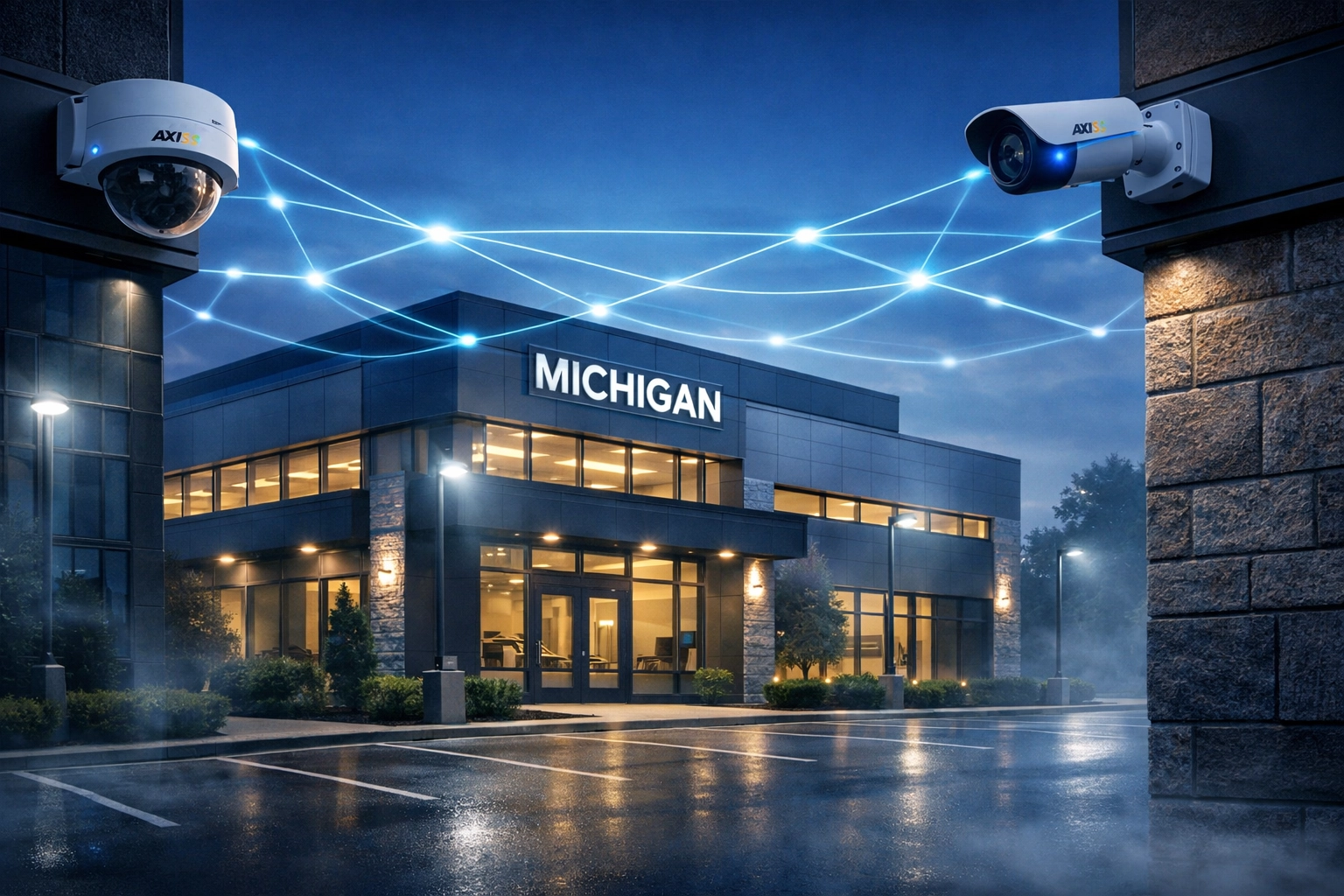
Start with a comprehensive security infrastructure assessment. Your IT partner should evaluate which cameras provide strategically valuable views for emergency response: typically exterior cameras covering parking lots, building perimeters, and primary entry points. Interior cameras in break rooms, private offices, or areas where employees have reasonable privacy expectations should generally remain excluded from the program, giving you complete control over which feeds first responders can access.
Strike a balance between coverage and privacy. Michigan is a two-party consent state for audio recording, which means your network audio systems require different handling than video-only surveillance. Keep 911 Camera Share focused on video feeds from public-facing areas where employees and visitors have clear notice that monitoring occurs. Deploy visible signage that informs everyone when and where recording is active: transparency protects your business from compliance issues while maintaining the trust your team needs to feel safe at work.
The Insurance and Liability Advantage
Frame your 911 Camera Share investment as demonstrated duty of care when discussing it with your insurance provider. Michigan businesses carry legal obligations to provide reasonably safe environments for employees and customers. Installing advanced surveillance is one thing; integrating it with emergency services shows insurers you've invested in proactive safety infrastructure that can help improve response coordination during critical incidents.
The liability protection comes from multiple angles. Real-time visual information helps dispatchers coordinate emergency response and deploy appropriate resources more efficiently. When something goes wrong, your complete footage ownership matters: you maintain all recordings while emergency services retain nothing after the call ends. This creates a documented timeline of events and your response efforts without surrendering control of sensitive business data.
Use measured language when presenting this to your insurer or legal counsel. The system can help reduce liability exposure by improving emergency response coordination and demonstrating reasonable care. It helps dispatchers make better decisions with real-time intelligence. But position it correctly: 911 Camera Share is one component of comprehensive security, not a guarantee that incidents won't occur or that response times will always meet expectations.
Michigan businesses typically invest a few hundred dollars annually for 911 Camera Share participation through ClearPath IT: significantly less than traditional 24/7 monitoring services that require monthly fees and ongoing contract commitments. Compare this to your current security spend and factor in the potential insurance implications. Some carriers may recognize the system as measurable risk mitigation, though benefits vary by provider and policy structure.

Technical Integration: What Your IT Partner Must Deliver
Begin your technical planning by acknowledging that network security determines everything. Your Axis cameras already generate IP traffic on your business network: adding 911 Camera Share means creating secure, encrypted pathways that dispatchers can access only during active emergencies. Your managed IT provider must implement robust cybersecurity protocols before any integration happens.
Require multi-factor authentication (MFA) for all camera system access, particularly administrative accounts that control camera settings and access permissions. This single measure prevents unauthorized users from exploiting weak passwords to view your surveillance feeds or modify system configurations. Role-based access controls should limit which employees can view live feeds, configure settings, or grant permissions: not everyone needs administrative privileges.
Network segmentation isolates your surveillance infrastructure from other business operations. This means your cameras operate on a separate network segment with strict firewall rules governing what traffic flows in and out. If ransomware compromises your accounting systems, it can't jump to your surveillance network and disable your security infrastructure during an attack. Regular security audits identify vulnerabilities before they're exploited, ensuring your system remains hardened against evolving threats.
The actual integration between your Axis Communications cameras and Michigan's emergency services network happens through secure API connections configured during initial setup. Once activated, the system runs automatically: when someone at your business dials 911, dispatchers receive an automatic notification that camera access is available. They can accept or decline that access based on incident needs, but the system handles all authentication and authorization automatically through protocols your IT partner established during implementation.

If you're upgrading from analog systems or adding coverage areas, expect camera installation, network configuration, and cybersecurity hardening to require more substantial project time. Most businesses running modern Axis cameras integrated with managed IT networks complete activation within a few hours. Older infrastructure might need days or weeks depending on how much equipment requires replacement and how extensively your network needs reconfiguration.
Real-Time Intel That Changes Emergency Response
Picture this scenario: An employee working late encounters an armed individual in your parking lot and dials 911 from inside the building. Without 911 Camera Share, the dispatcher works from stressed, unclear descriptions: possibly one suspect, maybe two, weapon type uncertain, current location unknown. First responders approach your property planning for worst-case scenarios because they lack reliable intelligence.
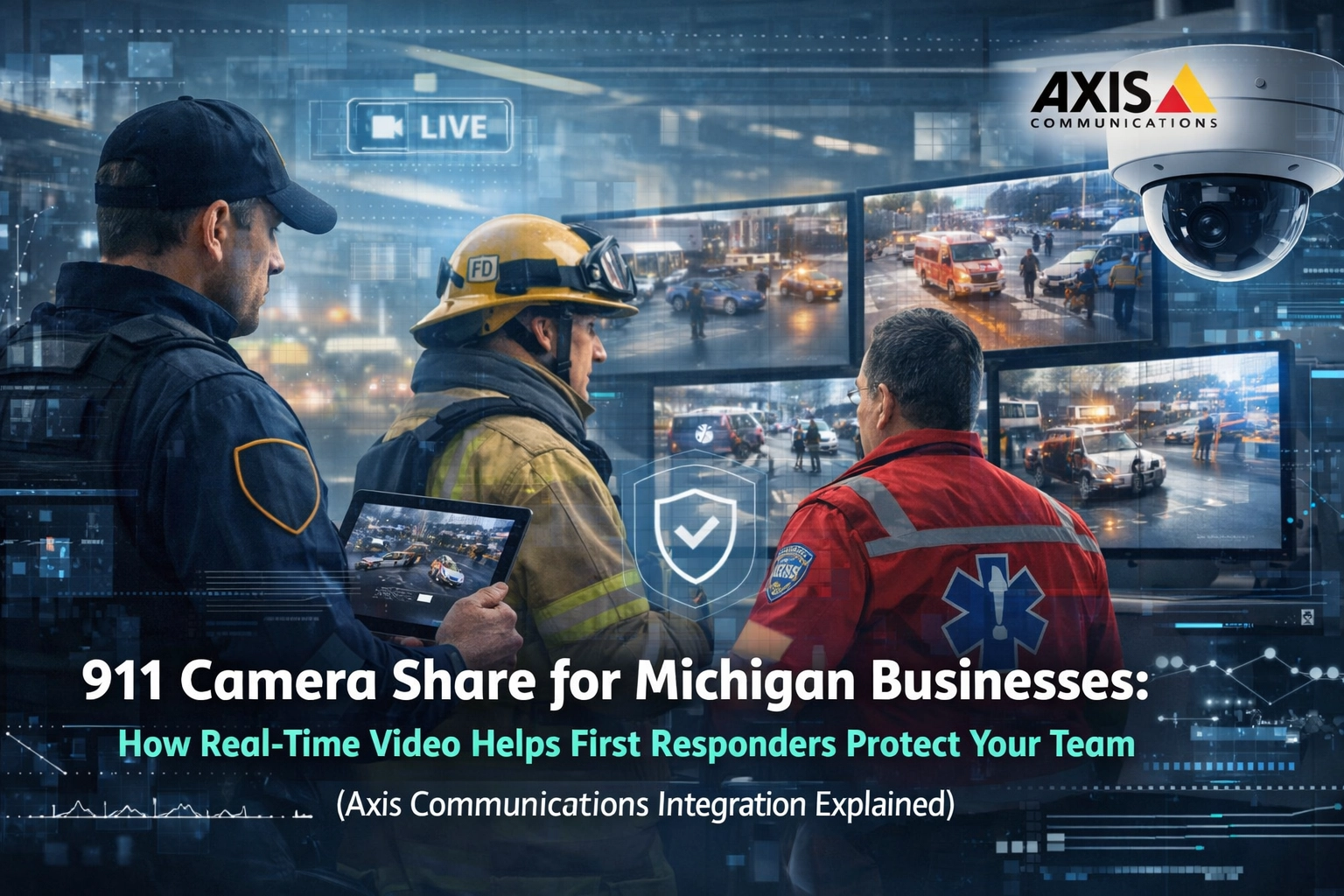
With 911 Camera Share through ClearPath IT, dispatchers instantly see what's happening. They can confirm suspect count, identify weapons, track movement direction, and spot hazards that might endanger first responders before officers arrive. This enhanced situational awareness lets law enforcement approach with appropriate resources deployed more efficiently: potentially de-escalating dangerous situations before they become critical incidents.
This system creates value beyond active threats. Medical emergencies benefit from visual confirmation of patient location and condition. Fire calls let dispatchers see smoke patterns and identify optimal access points for emergency crews. The 911 Director benefit is clear: instead of working from incomplete caller descriptions, dispatchers get critical information to fire, EMS, or law enforcement much quicker.
Your employees gain psychological safety benefits too. Knowing that pressing a panic button or dialing 911 immediately connects first responders to live camera feeds creates confidence that help isn't just coming: help can see what's happening and arrive prepared. This matters particularly for retail businesses, medical offices, and other environments where employees regularly interact with potentially aggressive individuals.
Your Implementation Roadmap
Schedule your security infrastructure assessment with ClearPath IT as your starting point. This evaluation should examine your current alarm system, access control, camera coverage, and network architecture to identify gaps before activation. You need clear recommendations addressing which cameras to include in 911 Camera Share, what security enhancements are necessary, and how the system integrates with your existing managed IT infrastructure and help desk support.
Budget for ongoing maintenance and support. Your cameras need regular firmware updates to patch security vulnerabilities. Network configurations require monitoring to ensure the emergency access pathways remain functional. System testing verifies cameras stay operational when emergencies occur: the last thing you want is discovering critical cameras are offline during an actual 911 call.
Share this initiative with your team during implementation. Employees should understand how the system works, which areas have camera coverage, and what happens during emergency calls. This transparency builds trust and ensures everyone knows the system exists to improve their safety, not monitor their daily activities. Clear communication prevents misunderstandings about privacy and system purpose.
Keep your insurance provider and legal counsel informed throughout the process. Document your investment in safety infrastructure, implementation timeline, and ongoing maintenance commitments. These records demonstrate reasonable care and proactive risk management: valuable evidence if liability questions ever arise.
Use this opportunity to evaluate your complete security ecosystem. 911 Camera Share works best when integrated with professional alarm systems, modern access control, and comprehensive managed IT support. If you're upgrading cameras anyway, consider whether your access control system needs modernization or whether network audio could enhance your security coverage in areas where cameras alone provide incomplete protection.
Ready to bridge the gap between your security infrastructure and Michigan first responders? Contact ClearPath360 to schedule your 911 Camera Share assessment. We'll evaluate your current systems, identify technical requirements, and create a clear implementation roadmap that integrates Axis Communications cameras with emergency services: protecting your employees, customers, and business with technology designed for real-world threats.