When seconds matter, the difference between a delayed response and an effective one often comes down to information. Your security cameras are already recording what's happening at your Michigan facility: but during an active emergency, that footage sits locked away until after the crisis ends. 911 Camera Share through ClearPath IT changes that equation entirely, connecting your existing surveillance infrastructure directly to emergency dispatchers when they need it most.
This isn't about replacing your current alarm system or access control setup. Think of this as the missing bridge between your physical security investment and the first responders racing to your location. Let's walk through exactly how real-time video access transforms emergency response: and why Michigan businesses across Metro Detroit, Grand Rapids, and beyond are making this integration a priority.
Why Legacy Systems Leave You Half-Protected
Begin by understanding what your current setup can and cannot do. Most Michigan businesses have invested in solid surveillance infrastructure: quality Axis cameras monitoring entries, parking lots, and critical areas. You've got your alarm system dialed in, your access control managing who enters when, and maybe even network audio for emergency announcements.
Here's the limitation: when someone dials 911 from your facility, dispatchers are working blind. They're fielding a panicked call, asking questions, trying to piece together what's actually happening while your cameras capture everything in crystal-clear detail. Your security footage becomes evidence after the incident, but it doesn't help the officers forming their response strategy in those crucial first minutes.
That gap between what your cameras see and what dispatchers know creates risk: for your employees, for responding officers, and for your liability exposure.

The 7 Ways Real-Time Video Changes Everything
1. Visual Confirmation Replaces Panicked Descriptions
Picture this scenario: an employee calls 911 during a break-in. They're understandably distressed, maybe hiding, definitely not in a position to provide clear details about how many intruders there are, what they're doing, or which direction they're moving.
With 911 Camera Share, the Livingston County or Oakland County dispatcher doesn't have to rely solely on that caller's fragmented information. They pull up your camera feed and see the situation themselves: immediately. This visual confirmation helps dispatchers assess threat levels accurately and relay specific, actionable intelligence to responding units.
2. Accelerates Information Delivery to First Responders
Use this capability to compress your response timeline dramatically. Instead of dispatchers asking question after question while officers are already en route, they're gathering details from your camera feeds within seconds. Fire departments see smoke location and spread patterns. EMS personnel know how many people need assistance before they arrive. Law enforcement identifies whether they're dealing with one suspect or multiple threats.
This acceleration doesn't just save time: it helps first responders make informed decisions about resources, entry points, and approach strategies before they're committed to a particular course of action.
3. Provides Pre-Arrival Situational Intelligence
Strike a balance between speed and safety by giving officers the intelligence advantage. Your Axis cameras show building layout reality, not blueprint theory. Dispatchers can brief responding officers about which doors are compromised, where people are congregated, and which areas appear secure versus which are actively threatened.
For Michigan small businesses with complex layouts: manufacturing facilities with multiple buildings, retail locations with back offices and storage areas, medical practices with separated patient zones: this pre-arrival intelligence transforms how first responders coordinate their approach.
4. Tracks Threat Location and Movement in Real-Time
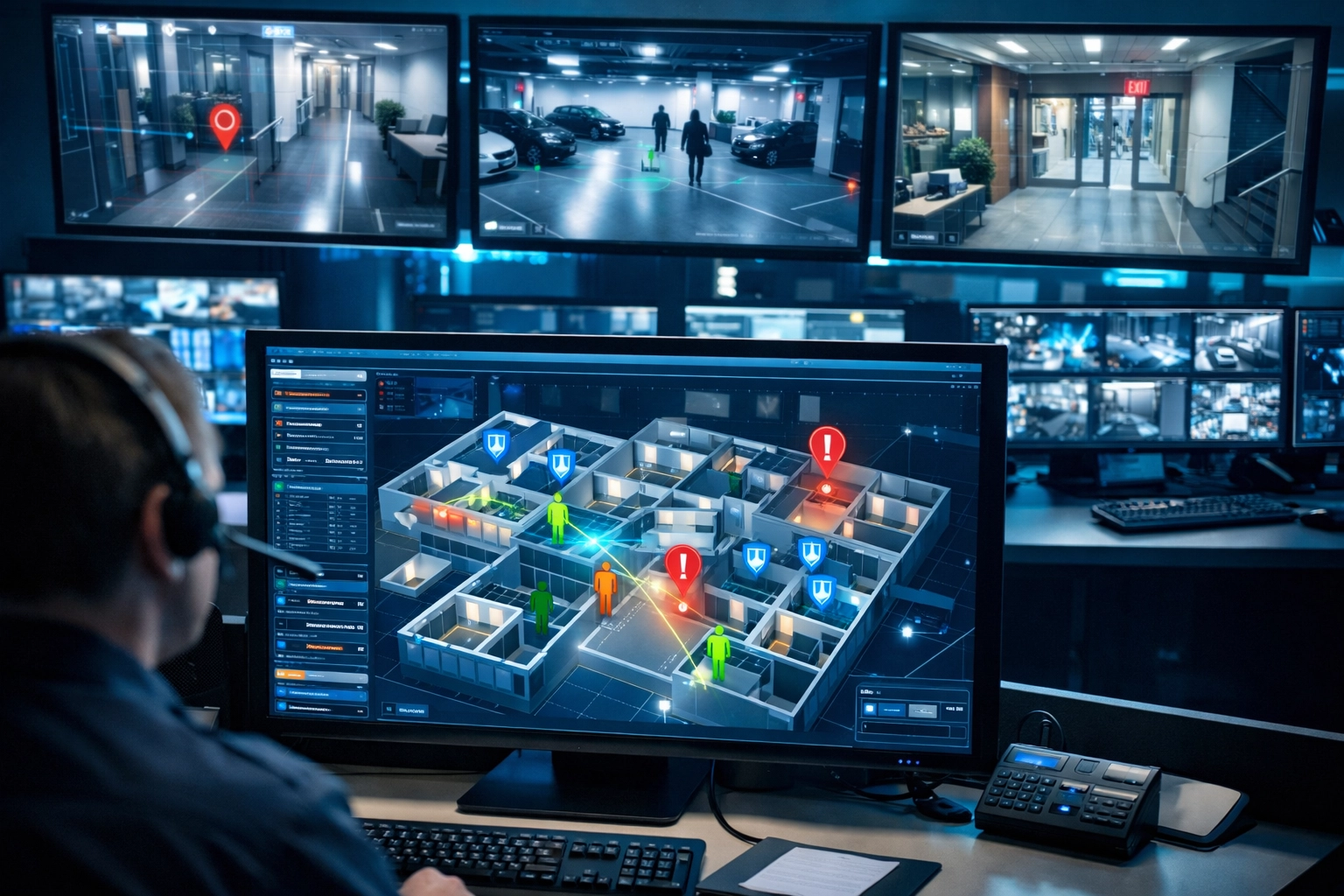
This is where the technology shifts from helpful to potentially life-saving. In workplace violence situations, active threat scenarios, or even medical emergencies where circumstances are rapidly changing, dispatchers can visually track what's happening as it unfolds. They see where threats move, they identify safe corridors for evacuation, and they can direct responding units to specific locations based on current conditions rather than outdated caller information.
Keep your language precise here: this capability helps dispatchers coordinate more effective responses. It doesn't guarantee specific outcomes, but it removes the fog of uncertainty that traditionally hampers emergency response coordination.
5. Guides Officers to Employees in Danger
Share this application with your team when explaining the employee safety benefits. If someone's injured, trapped, or hiding during an incident, dispatchers can use your camera feeds to locate them and guide officers directly to their position. This happens without requiring the endangered employee to call back, move to a different location, or otherwise expose themselves to additional risk.
Your surveillance infrastructure: already monitoring your facility: becomes a tool for protecting the people who work there.
6. Maintains Privacy Through Your Control
As you move toward implementation, understand exactly what control you maintain. You select which cameras participate in 911 Camera Share: typically exterior cameras, parking areas, and public entry points. Sensitive interior areas like executive offices, HR spaces, or private meeting rooms stay off the network entirely.
Access activates exclusively during active 911 calls originating from your location. The moment the emergency concludes, access terminates automatically. You receive real-time notifications whenever any camera is accessed, creating complete transparency about when your system is being utilized and by whom. This isn't continuous monitoring: it's emergency-activated assistance that respects your privacy boundaries.
7. Delivers Insurance and Liability Protection
This is where value extends beyond emergency response into your risk management framework. When incidents occur, your ability to demonstrate that you provided first responders with every available tool to respond effectively becomes part of your liability defense. Insurance carriers increasingly recognize facilities with enhanced emergency response capabilities when evaluating coverage and premiums.
Document your 911 Camera Share implementation as part of your comprehensive security posture. It demonstrates due diligence, investment in employee safety, and proactive risk mitigation: all factors that help during liability assessments and insurance renewals.
The Technical Integration: How Axis Communications Makes It Seamless
Begin with this foundation: 911 Camera Share through ClearPath IT leverages your existing Axis Communications camera infrastructure. If you're already running Axis cameras for surveillance, access control integration, or facility monitoring, you're halfway there. The system uses encrypted channels that never expose your network credentials or camera passwords to emergency communication centers.
For Michigan businesses working with managed IT providers like ClearPath360, the integration happens at the network level without compromising your cybersecurity posture. Your Help Desk doesn't field constant technical issues because the system operates independently once configured. Small business IT environments benefit from this simplicity: there's no complex ongoing management required from your team.
The Axis Communications platform ensures compatibility with Michigan's emergency communication infrastructure, from Wayne County to Kent County and throughout the state. When your dispatcher needs access, they're connecting through secure, encrypted protocols that meet both public safety requirements and your network security standards.

Moving Forward: What Implementation Looks Like
Your next step involves assessment, not disruption. ClearPath360 evaluates your existing surveillance infrastructure, identifies which cameras make sense for 911 Camera Share participation, and handles the technical integration with your local emergency communication center. For most Michigan businesses, this happens without replacing cameras, rewiring networks, or disrupting daily operations.
The ongoing relationship is equally straightforward. Your managed services provider handles system monitoring, your alarm system continues operating as configured, and your access control remains under your management. 911 Camera Share operates in the background, ready when needed but invisible during normal operations.
Consider this technology as the completion of your security investment: the final connection that transforms surveillance from passive recording to active emergency response support. Your cameras were already protecting your facility. Now they can help protect your people when it matters most.
Ready to bridge the gap between your security infrastructure and emergency response? Contact ClearPath360 to discuss how 911 Camera Share integrates with your existing Axis Communications cameras, alarm system, and managed IT environment. Michigan businesses throughout Metro Detroit, Grand Rapids, Ann Arbor, and beyond are discovering how real-time video access transforms emergency response: without compromising privacy or network security.